
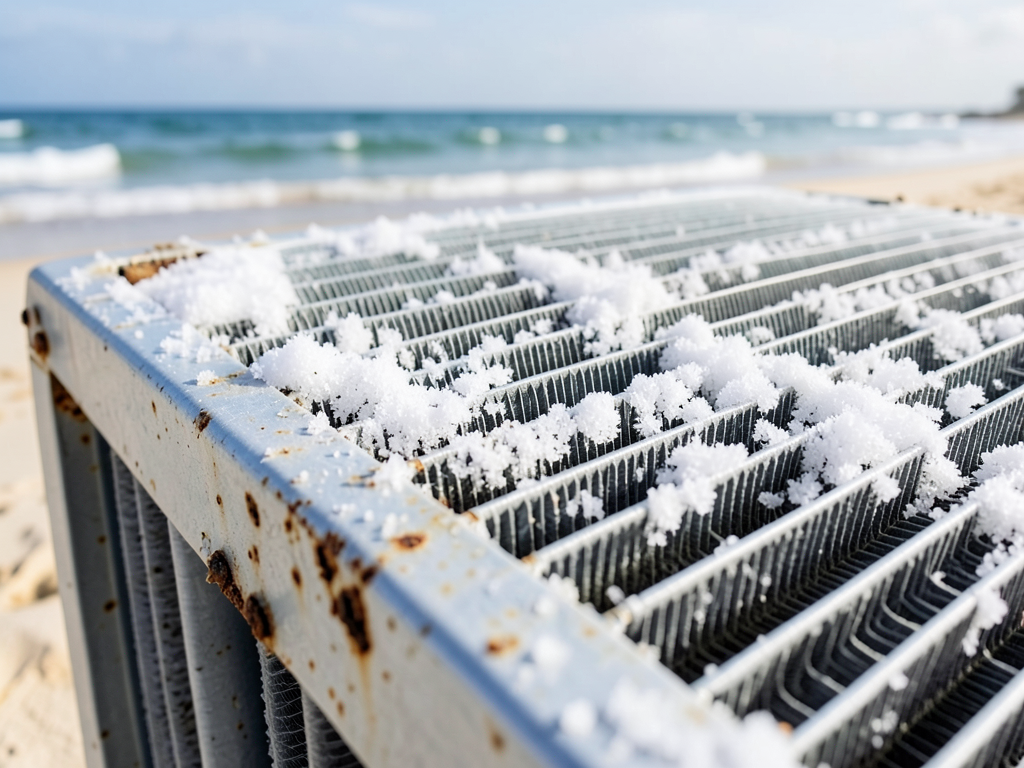
Protecting Your Apollo Beach AC Unit from Salt Air Corrosion and Damage
Your air conditioning system faces a relentless enemy in Apollo Beach. The salty Gulf breeze that cools your skin in summer also slowly destroys your AC unit’s internal components. Within months of installation, salt air begins corroding aluminum fins, copper tubing, and electrical connections. This coastal corrosion accelerates wear, reduces efficiency, and leads to costly repairs or complete system failure. EPA Section 608 Refrigerant Regulations.
The humid subtropical climate of Hillsborough County creates perfect conditions for corrosion. Salt particles carried by ocean breezes settle on your outdoor condenser unit. When combined with Tampa Bay’s high humidity, these particles form a corrosive film that eats away at metal surfaces. Without proper protection, your AC system’s lifespan can be cut in half compared to inland units.
Understanding how salt air damages your HVAC system helps you take effective prevention steps. This guide covers the specific threats facing Apollo Beach homeowners, proven protection methods, and when to call for professional service. You’ll learn to recognize early warning signs before minor corrosion becomes major system failure. Who to Call for 24-Hour AC Service in New Tampa When the Temperature Starts Climbing.
Understanding Salt Air Corrosion in Apollo Beach
Salt air corrosion occurs when airborne sodium chloride particles settle on metal surfaces and combine with moisture to create an electrochemical reaction. In Apollo Beach, this process happens constantly due to our proximity to Tampa Bay and the Gulf of Mexico.
The corrosion process works like this: Salt particles land on your condenser coils, compressor housing, and electrical components. Tampa’s humidity provides the moisture needed for the reaction. The salt-water mixture creates tiny electrical currents that slowly break down metal at the molecular level. Over time, this creates pitting, cracks, and structural weakness.
Apollo Beach experiences some of the highest salt air concentrations in Hillsborough County. Our location directly on Tampa Bay means we get salt-laden breezes from both the bay and the Gulf through the bay channel. The Waterset and MiraBay communities, built on former marshland, face even higher exposure levels due to their low elevation and proximity to water.
The Florida Building Code Section 553.73 requires hurricane-resistant equipment mounting in coastal zones, but it doesn’t specifically address salt air corrosion protection. This leaves homeowners responsible for implementing additional safeguards against this invisible threat. Florida Building Code Energy Conservation.
Common AC Components Damaged by Salt Air
Several critical AC components are particularly vulnerable to salt air damage. The condenser coils, made of copper tubing with aluminum fins, suffer the most. Salt air creates microscopic pits in the aluminum fins, reducing heat transfer efficiency. This forces your system to work harder, increasing energy costs and wear.
The compressor housing faces constant salt spray exposure. The protective paint coating breaks down over time, exposing the metal underneath to direct corrosion. Once corrosion starts on the housing, it quickly spreads to internal compressor components, leading to complete failure.
Electrical connections and control boards are highly susceptible to salt air damage. The salt-water mixture creates conductive paths between circuits, causing shorts and malfunctions. You might notice erratic thermostat behavior or complete system shutdowns as corrosion progresses.
The fan motor and bearings also deteriorate from salt exposure. The protective grease washes away, leaving metal parts to grind against each other. This creates a distinctive grinding noise that signals imminent motor failure.
Refrigerant lines running from the condenser to your home can develop pinhole leaks from salt corrosion. These small leaks reduce cooling capacity and can lead to complete refrigerant loss if not detected early. Cooling Tower Services.
Early Warning Signs of Salt Air Damage
Recognizing early warning signs helps you address salt air damage before catastrophic failure occurs. One of the first indicators is reduced cooling efficiency. Your AC runs longer cycles but struggles to maintain set temperatures, especially during afternoon heat.
Listen for unusual noises from your outdoor unit. A healthy AC system should run quietly with only a gentle hum. Grinding, clicking, or buzzing sounds indicate motor bearing wear or electrical problems caused by salt corrosion.
Inspect your condenser coils monthly during summer months. Look for white or gray powdery deposits on the aluminum fins. These deposits are salt accumulation that’s already begun the corrosion process. Clean fins appear bright and uniform, while corroded fins show discoloration and pitting.
Check for refrigerant leaks by monitoring your system’s cooling performance. If your AC blows warm air intermittently or ice forms on the larger refrigerant line, you likely have a leak caused by corroded tubing.
Watch your energy bills for unexplained increases. As corrosion reduces system efficiency, your AC consumes more electricity to achieve the same cooling results. A 15-20% increase in cooling costs often indicates developing efficiency problems.
Proven Protection Strategies for Apollo Beach Homes
Installing a quality condenser coil coating provides the first line of defense against salt air corrosion. These specialized polyurethane coatings create a barrier that prevents salt particles from contacting metal surfaces. Professional application costs $300-500 but extends coil life by 3-5 years.
Consider a sacrificial anode system for your outdoor unit. Similar to those used on boats, these zinc rods attract corrosive elements away from your AC components. They require annual replacement but can prevent thousands in corrosion damage.
Install a salt-air filtration system on your home’s fresh air intake. These units use activated carbon and specialized filters to remove salt particles before they enter your HVAC system. While primarily designed for indoor air quality, they significantly reduce the salt load on your outdoor unit.
Schedule quarterly professional cleaning during summer months. Technicians use specialized coil cleaners that neutralize salt deposits and apply protective treatments. This maintenance prevents salt buildup from becoming permanent corrosion.
Upgrade to corrosion-resistant components when replacing parts. Modern condensers feature tin-plated copper tubing and epoxy-coated aluminum fins that withstand salt air exposure much better than standard materials.
Maintenance Schedule for Coastal AC Systems
Coastal AC systems require more frequent maintenance than inland units. Create a maintenance calendar that addresses the unique challenges of salt air exposure.
Monthly tasks include visual inspection of the outdoor unit, checking for salt accumulation on coils, and ensuring drain lines flow freely. Clear away vegetation within two feet of the unit to maintain proper airflow and reduce debris accumulation.
Every three months, schedule professional cleaning and inspection. Technicians should check refrigerant levels, test electrical connections, and apply protective coatings. This quarterly service prevents minor issues from becoming major failures. Troubleshooting AC Issues.
Annually, have a comprehensive system evaluation. This includes checking compressor performance, testing capacitor function, and inspecting ductwork for salt-related deterioration. Consider this your system’s physical exam to catch developing problems early.
After major storm events, especially those with high winds from the Gulf, inspect your unit for damage and clean any accumulated debris. Storms often deposit additional salt and can damage protective coatings.
Keep detailed maintenance records to track system performance over time. Note any efficiency changes, unusual noises, or repair needs. This history helps technicians diagnose problems more quickly and accurately.
When to Replace vs. Repair Salt-Damaged Units
Deciding between repair and replacement depends on several factors specific to salt air damage. Age matters significantly. Units over 10 years old with moderate corrosion often cost more to repair than replace, especially considering reduced efficiency.
Evaluate the extent of visible corrosion. Surface-level damage on coils or housing might justify repair, but widespread corrosion affecting multiple components usually means replacement is more cost-effective. A good rule: if repair costs exceed 50% of replacement cost, replacement is typically better.
Consider energy efficiency gains. Modern AC units achieve 16-20 SEER ratings compared to 10-12 SEER for units from a decade ago. The energy savings often offset replacement costs within 3-5 years, especially important in Apollo Beach’s long cooling season.
Check warranty coverage. Many manufacturers offer extended warranties against corrosion for coastal installations. If your unit is under warranty, repairs might be covered even if replacement would be more practical otherwise.
Assess your home’s cooling needs. If your current system struggles to maintain comfort during peak summer heat, replacement with a properly sized unit often solves both the corrosion problem and comfort issues simultaneously.
Energy Efficiency Considerations for Coastal Homes
Salt air damage directly impacts your AC’s energy efficiency. Corroded coils cannot transfer heat effectively, forcing the system to run longer cycles. This increased runtime multiplies the damage, creating a destructive cycle of inefficiency and accelerated wear.
High-efficiency units with variable-speed compressors handle salt air exposure better than single-stage units. They run at lower speeds during mild conditions, reducing the stress on already compromised components. This gentler operation can extend system life even with existing corrosion.. Read more about High-Efficiency HVAC Solutions for Waterfront Homes on Davis Islands.
Proper sizing becomes crucial in coastal environments. Oversized units short-cycle, never running long enough to properly dehumidify. This leaves excess moisture on components, accelerating corrosion. A correctly sized unit runs longer, more efficient cycles that actually protect against moisture-related damage.
Consider heat pump systems for year-round efficiency. Modern heat pumps handle Florida’s mild winters while providing superior dehumidification during summer. The two-way operation helps maintain consistent temperatures that reduce condensation on vulnerable components.
Smart thermostats optimize efficiency by learning your home’s cooling patterns and adjusting run times accordingly. They can detect efficiency drops caused by corrosion and alert you before major problems develop.
Local Building Codes and Permit Requirements
Hillsborough County requires permits for most AC installations and major repairs. The permitting process ensures work meets Florida Building Code requirements for coastal installations, including proper tie-downs and hurricane-resistant mounting.
Section 553 of the Florida Building Code addresses wind load requirements for equipment in coastal zones. Units must be mounted to withstand 140+ mph winds, with specific tie-down requirements based on building height and location. These requirements protect against both wind damage and the vibration that accelerates corrosion.
EPA regulations under Section 608 require proper refrigerant handling during repairs and replacements. Only certified technicians can perform refrigerant work, ensuring compliance with environmental protection standards while preventing leaks that salt air can exploit.
Local energy codes mandate minimum efficiency standards for new installations. In Apollo Beach, new AC units must achieve at least 14 SEER2 efficiency, with higher requirements for larger systems. These standards help offset the increased energy consumption caused by coastal operating conditions.
Homeowner association rules in communities like MiraBay and Waterset may impose additional requirements for unit placement and appearance. Check these guidelines before installation to avoid compliance issues.
Professional Diagnostic Services for Salt Air Damage
Professional diagnosis of salt air damage requires specialized equipment and expertise. Technicians use electronic leak detectors that can find pinhole leaks in corroded refrigerant lines before they become major problems. These detectors sense refrigerant escaping through microscopic corrosion holes.
Electrical testing identifies corrosion-related issues in control boards and wiring. Technicians measure voltage drops and resistance across connections to find corrosion that isn’t yet visible. This proactive testing prevents unexpected system failures.
Thermal imaging cameras reveal heat transfer problems caused by corroded coils. Areas with reduced heat exchange show up as temperature differences on the thermal scan, helping technicians target cleaning and repair efforts effectively.
Refrigerant analysis can detect contamination from corrosion byproducts. Salt and metal particles in the refrigerant indicate internal component deterioration and help predict imminent failures.
Professional cleaning uses commercial-grade coil cleaners that neutralize salt deposits without damaging protective coatings. These cleaners penetrate deeper than consumer products, removing corrosion before it becomes structural. Reliable Commercial HVAC Services for Temple Terrace Business Owners.
Emergency Response for Salt Air Failures
When salt air damage causes complete system failure, quick response prevents further property damage and discomfort. Emergency AC repair in Apollo Beach requires technicians familiar with coastal system failures and equipped with common replacement parts.
Common emergency scenarios include complete compressor failure, refrigerant loss from corroded lines, and electrical control board malfunction. Each requires different diagnostic approaches and parts availability.
Emergency service calls should include temporary cooling solutions if complete repair isn’t immediately possible. Portable AC units or fans can provide relief while waiting for parts or complete system replacement.
After-hours emergency service typically costs 1.5-2 times standard rates but prevents heat-related health issues and property damage. The premium is often worthwhile given Apollo Beach’s summer heat indexes regularly exceeding 100°F.
Emergency response times vary by time of day and season. Expect 2-4 hour response during peak summer months, with longer waits during widespread heat waves when multiple systems fail simultaneously.
Cost Considerations for Coastal AC Maintenance
Coastal AC maintenance costs more than inland service due to increased frequency and specialized procedures. Quarterly professional cleaning typically costs $150-250 compared to $75-125 for standard maintenance schedules.
Protective coatings and sacrificial anode systems represent upfront investments that reduce long-term repair costs. A $400 coating application can extend system life by 3-4 years, potentially saving thousands in premature replacement costs.
Energy efficiency losses from salt air damage directly impact your utility bills. A system operating at 70% efficiency due to corrosion costs 30-40% more to run than a properly maintained unit. This ongoing expense often exceeds maintenance costs over the system’s lifetime.
Insurance considerations matter for coastal properties. Some policies offer equipment breakdown coverage that includes corrosion damage. Review your policy to understand what’s covered and consider additional coverage if needed.
Replacement timing affects costs significantly. Replacing a unit before complete failure often costs less than emergency replacement during peak season when demand and prices are highest.
Frequently Asked Questions
How often should I clean my AC condenser in Apollo Beach?
Clean your condenser coils monthly during summer and every two months during cooler seasons. Professional deep cleaning should occur quarterly to remove salt buildup that regular cleaning misses.
Can I install a standard AC unit in a coastal area?
While possible, standard units typically last 7-10 years in coastal areas compared to 15-20 years inland. Coastal-rated units with enhanced corrosion protection cost more upfront but save money long-term through extended life and better efficiency.
What’s the average lifespan of an AC unit in Apollo Beach?
With proper maintenance, expect 12-15 years from a quality coastal-rated unit. Standard units without corrosion protection typically fail within 7-10 years due to salt air damage.
Are there any rebates for energy-efficient AC upgrades in Hillsborough County?
TECO Energy and Hillsborough County occasionally offer rebates for high-efficiency AC installations. Check with local utilities and the county’s energy office for current programs, which can offset 10-20% of replacement costs.
How do I know if my AC problems are from salt air or normal wear?
Salt air damage typically shows as white powdery deposits on coils, premature corrosion on visible metal parts, and electrical issues occurring within the first 3-5 years. Normal wear usually affects older systems and shows different failure patterns.
Protecting Your Investment
Your AC system represents a significant investment in your Apollo Beach home’s comfort and value. Salt air corrosion threatens this investment through reduced efficiency, increased repair costs, and premature failure. Understanding these threats allows you to take effective protective measures.
Regular maintenance, protective coatings, and timely repairs prevent minor corrosion from becoming major system failure. Professional diagnosis catches problems early when they’re most cost-effective to fix. Energy-efficient upgrades offset the increased operating costs common in coastal environments.
The humid subtropical climate of Hillsborough County makes air conditioning essential for comfortable living. Protecting your AC system from salt air damage ensures reliable cooling when you need it most. Don’t wait for complete failure to address corrosion issues.
Call (656) 237-5377 today to schedule your comprehensive AC inspection. Our technicians understand the unique challenges facing Apollo Beach homeowners and provide solutions that protect your system from salt air corrosion. We’ll evaluate your current setup, recommend appropriate protection strategies, and help you avoid costly emergency repairs.
Pick up the phone and call (656) 237-5377 before the next summer heat wave hits. Your comfort and peace of mind are worth protecting.
{
“@context”: “https://schema.org”,
“@type”: “BlogPosting”,
“headline”: “Protecting Your Apollo Beach AC Unit from Salt Air Corrosion and Damage”,
“description”: “Learn how Apollo Beach’s coastal salt air destroys AC units and discover proven protection strategies. Local HVAC experts explain corrosion prevention, maintenance, and repair.”,
“wordCount”: 2637,
“datePublished”: “2026-02-23T09:13:00.000Z”,
“dateModified”: “2026-02-23T09:13:00.000Z”,
“inLanguage”: “en-US”,
“mainEntityOfPage”: {
“@type”: “WebPage”,
“@id”: “https://peakhvactampa.com”
},
“publisher”: {
“@type”: “LocalBusiness”,
“name”: “Peak HVAC Tampa”,
“url”: “https://peakhvactampa.com”
},
“author”: {
“@type”: “Organization”,
“name”: “Peak HVAC Tampa”,
“url”: “https://peakhvactampa.com”
},
“image”: {
“@type”: “ImageObject”,
“url”: “https://peakhvactampa.com/wp-content/uploads/2026/03/protecting-your-apollo-beach-ac-unit-from-salt-air-1.png”
}
}
{
“@context”: “https://schema.org”,
“@type”: “HVACBusiness”,
“name”: “Peak HVAC Tampa”,
“url”: “https://peakhvactampa.com”,
“address”: {
“@type”: “PostalAddress”,
“addressLocality”: “Tampa”
},
“areaServed”: {
“@type”: “City”,
“name”: “Tampa”
}
}
{
“@context”: “https://schema.org”,
“@type”: “FAQPage”,
“mainEntity”: [
{
“@type”: “Question”,
“name”: “How often should I clean my AC condenser in Apollo Beach?”,
“acceptedAnswer”: {
“@type”: “Answer”,
“text”: “Clean your condenser coils monthly during summer and every two months during cooler seasons. Professional deep cleaning should occur quarterly to remove salt buildup that regular cleaning misses.”
}
},
{
“@type”: “Question”,
“name”: “Can I install a standard AC unit in a coastal area?”,
“acceptedAnswer”: {
“@type”: “Answer”,
“text”: “While possible, standard units typically last 7-10 years in coastal areas compared to 15-20 years inland. Coastal-rated units with enhanced corrosion protection cost more upfront but save money long-term through extended life and better efficiency.”
}
},
{
“@type”: “Question”,
“name”: “What’s the average lifespan of an AC unit in Apollo Beach?”,
“acceptedAnswer”: {
“@type”: “Answer”,
“text”: “With proper maintenance, expect 12-15 years from a quality coastal-rated unit. Standard units without corrosion protection typically fail within 7-10 years due to salt air damage.”
}
},
{
“@type”: “Question”,
“name”: “Are there any rebates for energy-efficient AC upgrades in Hillsborough County?”,
“acceptedAnswer”: {
“@type”: “Answer”,
“text”: “TECO Energy and Hillsborough County occasionally offer rebates for high-efficiency AC installations. Check with local utilities and the county’s energy office for current programs, which can offset 10-20% of replacement costs.”
}
},
{
“@type”: “Question”,
“name”: “How do I know if my AC problems are from salt air or normal wear?”,
“acceptedAnswer”: {
“@type”: “Answer”,
“text”: “Salt air damage typically shows as white powdery deposits on coils, premature corrosion on visible metal parts, and electrical issues occurring within the first 3-5 years. Normal wear usually affects older systems and shows different failure patterns.”
}
}
]
}
{
“@context”: “https://schema.org”,
“@type”: “BreadcrumbList”,
“itemListElement”: [
{
“@type”: “ListItem”,
“position”: 1,
“name”: “Home”,
“item”: “https://peakhvactampa.com”
},
{
“@type”: “ListItem”,
“position”: 2,
“name”: “Blog”,
“item”: “https://peakhvactampa.com/blog”
},
{
“@type”: “ListItem”,
“position”: 3,
“name”: “Protecting Your Apollo Beach AC Unit from Salt Air Corrosion and Damage”
}
]
}
{
“@context”: “https://schema.org”,
“@type”: “Service”,
“serviceType”: “HVAC”,
“provider”: {
“@type”: “LocalBusiness”,
“name”: “Peak HVAC Tampa”,
“url”: “https://peakhvactampa.com”
},
“areaServed”: {
“@type”: “City”,
“name”: “Tampa”
},
“description”: “Learn how Apollo Beach’s coastal salt air destroys AC units and discover proven protection strategies. Local HVAC experts explain corrosion prevention, maintenance, and repair.”
}