
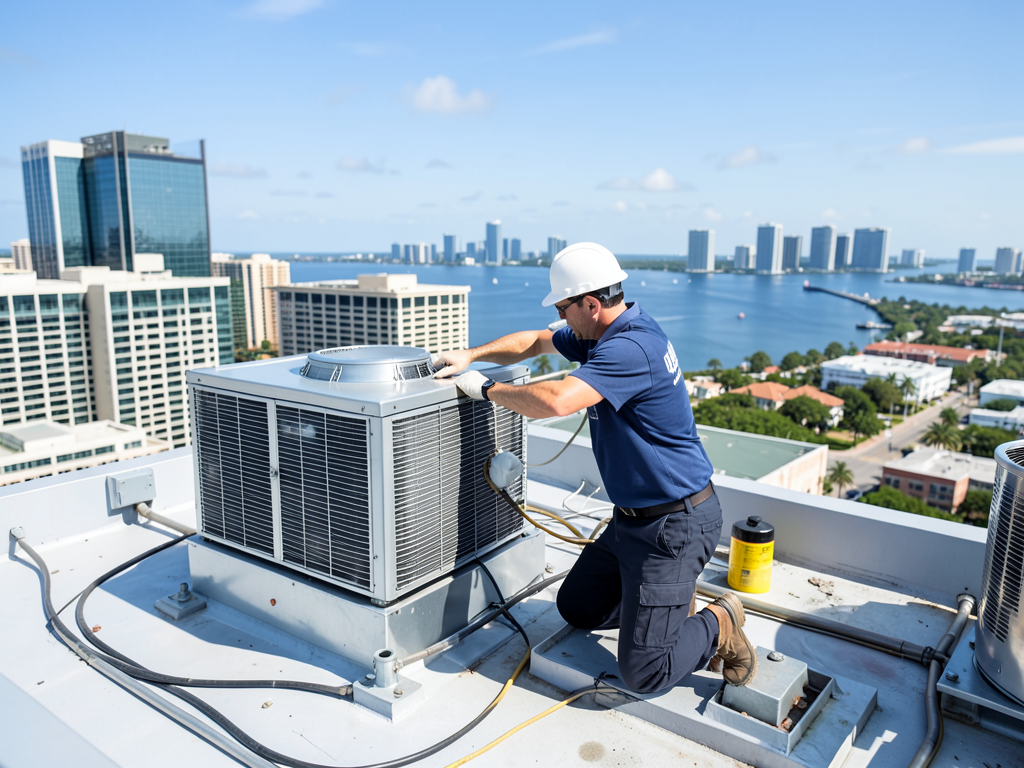
Expert AC Maintenance for Channelside Condos and High-Rise Living
Living in a Channelside condo means dealing with Florida’s brutal humidity inside a vertical building where every floor shares the same cooling system. When your AC fails in a high-rise, it’s not just your unit—it’s part of a complex network of water-source heat pumps, cooling towers, and building management systems that require specialized knowledge to repair correctly. Florida Building Code Section 403.6.1.
Most HVAC companies treat condos like single-family homes, but that approach leads to repeated failures, HOA complaints, and costly water damage. We understand the unique challenges of maintaining comfort in Tampa’s high-rise buildings where space is limited, access is restricted, and the margin for error is zero.
Specialized HVAC Solutions for Tampa Condominiums
Condo HVAC systems operate fundamentally differently than residential split systems. Instead of individual outdoor condensers, most Channelside buildings use water-source heat pumps connected to a central cooling tower. This setup requires understanding how water temperature, building pressure, and vertical stack configuration all affect system performance. Cooling Tower Services.
Water-source heat pumps extract heat from a circulating water loop rather than outside air. This means the entire building’s cooling capacity depends on the cooling tower’s ability to reject heat. When one unit fails, it can affect the entire water loop’s temperature, causing cascading problems throughout the building.
Channelside’s proximity to the waterfront adds another layer of complexity. Salt air accelerates corrosion on cooling tower components, while the area’s high-rise density creates wind tunnel effects that can disrupt airflow patterns around rooftop equipment. These factors require specific maintenance protocols that generic HVAC companies simply don’t understand.
Common Condo HVAC Issues We Solve
Water-source heat pump failures represent the most frequent service call in Channelside buildings. These units contain specialized components like water coils, reversing valves, and electronic expansion valves that differ significantly from standard residential equipment. When a heat pump trips on high head pressure, it’s often due to water flow issues rather than refrigerant problems. Who to Call for 24-Hour AC Service in New Tampa When the Temperature Starts Climbing.
Condensate management becomes exponentially more critical in vertical buildings. A single clogged drain line in a 20-story building can flood multiple units below, causing thousands in damage and angry neighbors. We implement redundant drain systems and install water sensors that alert building management before minor leaks become major disasters.
Thermostat integration with building automation systems creates another layer of complexity. Many Channelside condos use proprietary control systems that require specific programming knowledge. We work with building engineers to ensure your thermostat communicates correctly with the central system, preventing issues like simultaneous heating and cooling that waste energy and create comfort problems. Troubleshooting AC Issues.
Why Condo Repairs Differ from Residential Homes
Working in a condo means navigating HOA/COA regulations, insurance requirements, and building access protocols that don’t exist in single-family homes. Most Tampa condo associations require contractors to carry specific liability coverage, provide worker’s compensation certificates, and follow strict scheduling procedures for building access.
Space constraints in condo units create unique repair challenges. Closet-mounted air handlers leave minimal room for technicians to work, while ceiling-mounted units require specialized equipment to access. We bring compact tools and develop repair strategies that minimize disruption to your living space while maintaining professional standards. EPA Section 608 Certification.
Building cooling towers operate under different maintenance requirements than residential condensers. Florida Building Code Section 403.6.1 mandates specific water treatment protocols to prevent Legionella growth in cooling towers serving multiple units. We follow these requirements and maintain detailed documentation for building management review.
Channelside District Service Area
Our service area covers the heart of downtown Tampa, including the 33602 and 33605 zip codes that encompass Channelside, Harbour Island, and the surrounding business district. We understand the specific challenges of maintaining comfort in buildings along the Garrison Channel and near the Florida Aquarium.
The Channelside District’s waterfront location means dealing with salt corrosion on rooftop equipment, high humidity levels that stress cooling systems, and the occasional tropical storm that tests building integrity. We’ve developed maintenance protocols specifically for this microclimate that differ from inland Tampa areas.
Working in downtown Tampa requires understanding traffic patterns, parking restrictions, and building security protocols. We coordinate with property management to ensure technicians can access equipment efficiently, minimizing both labor costs and disruption to residents.
Our 24/7 Emergency Process
When your condo AC fails in July, every minute counts. Our emergency process starts with immediate assessment over the phone to determine if the issue affects just your unit or the entire building’s water loop. This initial diagnosis helps us bring the right tools and parts on the first visit. How to Choose the Right New Air Conditioner for Your Westchase Home.
We coordinate directly with building security and property management to ensure rapid access. Our technicians carry all required insurance documentation and follow established building protocols for elevator use and rooftop access. This preparation eliminates the delays that frustrate condo residents during emergencies.
Our diagnostic process includes checking water flow rates, measuring temperature differentials across the cooling tower, and testing individual heat pump operation. We use thermal imaging cameras to identify hot spots in electrical panels and refrigerant flow issues that aren’t visible to the naked eye.
Maintenance Programs for Condo Associations
Preventative maintenance prevents the emergency calls that disrupt building operations and upset residents. Our condo association programs include quarterly inspections of cooling towers, water quality testing, and individual unit performance checks that identify problems before they cause system-wide failures.
We provide detailed documentation for HOA boards, including equipment age assessments, energy consumption trends, and capital planning recommendations. This information helps associations budget for equipment replacement and negotiate better service contracts with cooling tower manufacturers.
Our maintenance contracts include priority emergency service, discounted repair rates, and guaranteed response times that protect both the association and individual unit owners from extended downtime during Florida’s hottest months.
Water Source Heat Pump vs. Traditional Systems
Understanding the difference between water-source heat pumps and traditional systems helps explain why condo repairs cost more and require specialized expertise. Traditional systems reject heat directly to outside air, while water-source systems transfer heat to a circulating water loop that requires continuous pumping and cooling tower operation.
Water-source systems offer better energy efficiency in high-rise applications because they eliminate the need for individual outdoor units on every floor. However, this efficiency comes with complexity—a single failed pump can shut down cooling for an entire building, while a refrigerant leak affects only one unit in a traditional system.
The initial installation cost for water-source systems runs 30-40% higher than traditional systems, but the long-term energy savings and reduced rooftop equipment often justify the investment for condo developers and associations.
Energy Efficiency in High-Rise Buildings
Energy efficiency in condo buildings requires a building-wide approach rather than focusing on individual units. We analyze the entire cooling system, from the cooling tower’s approach temperature to individual heat pump performance, to identify opportunities for energy savings that benefit all residents.
Variable frequency drives on cooling tower fans and pumps can reduce energy consumption by 20-30% during partial load conditions. We recommend these upgrades when existing equipment reaches the end of its service life, providing building associations with detailed payback calculations and utility rebate information.
Thermal energy storage systems can shift cooling loads to off-peak hours, reducing demand charges that often represent 30% of a building’s electric bill. This technology requires sophisticated controls and coordination with the local utility, expertise we provide to interested associations.
Building Code Compliance and Safety
Florida Building Code Section 403.6.1 requires specific safety measures for cooling towers serving multiple dwelling units. These include anti-scald devices on water loops, emergency shutoff switches accessible from building exits, and regular water quality testing to prevent Legionella growth.
We maintain current knowledge of all applicable codes and ensure our work meets or exceeds these requirements. This includes proper refrigerant handling under EPA Section 608 regulations, electrical code compliance for control wiring, and mechanical code requirements for condensate disposal.
Safety extends beyond code compliance to include proper fall protection when working on rooftops, electrical safety protocols when working near high-voltage equipment, and chemical handling procedures for water treatment applications.
Indoor Air Quality in Condo Buildings
Indoor air quality becomes more critical in condo buildings where ventilation is often limited and humidity levels can create mold growth conditions. We test for proper air exchange rates, measure humidity levels throughout buildings, and recommend filtration upgrades that improve air quality without reducing system efficiency.
UV light systems installed in cooling towers can reduce biological growth and improve overall system cleanliness. These systems require specific sizing and placement to be effective, knowledge we apply when recommending IAQ improvements to condo associations.
Proper humidity control prevents both comfort issues and property damage. We set cooling tower water temperatures and individual heat pump operation to maintain relative humidity between 45-55%, the range that prevents mold growth while maintaining comfort.
Emergency Leak Prevention Systems
Water damage represents the most common insurance claim in condo buildings, often caused by HVAC system failures. We install comprehensive leak detection systems that monitor condensate drains, water loops, and individual heat pump operation to prevent the flooding that damages multiple units.
Our systems include water sensors in critical areas, automatic shutoff valves that activate when leaks are detected, and alarm systems that notify building management immediately. These preventative measures cost far less than the average $5,000-$15,000 water damage claim.
Regular maintenance of these systems ensures they function when needed. We test sensors, verify valve operation, and update alarm settings as building usage patterns change throughout the year.
Cost Factors for Condo HVAC Service
Service costs for condo HVAC systems typically run 20-30% higher than residential service due to the specialized knowledge required, equipment complexity, and building access procedures. However, these costs are often shared across multiple unit owners through association fees, making individual service calls more affordable than in single-family homes.
Emergency service calls during peak summer months command premium rates due to high demand and the critical nature of cooling failures in Florida’s climate. Planning maintenance during shoulder seasons can reduce these costs while improving system reliability.
Energy efficiency upgrades often pay for themselves within 2-3 years through reduced utility costs. We provide detailed energy analysis and utility rebate information to help associations make informed decisions about system improvements.
Choosing the Right HVAC Contractor
Not all HVAC companies understand condo systems. When selecting a contractor, verify they carry proper insurance for multi-family work, understand water-source heat pump technology, and have experience with building management system integration.
Ask potential contractors about their experience with specific building systems in your area. A company that successfully maintains the cooling tower at the Channel Club will likely understand the systems at Victory Station or Skypoint.
Request references from other condo associations and verify their licensing with the Florida Department of Business and Professional Regulation. This due diligence prevents the costly mistakes that occur when inexperienced contractors work on complex condo HVAC systems.
Frequently Asked Questions
How often should condo HVAC systems be serviced?
Water-source heat pump systems require quarterly maintenance to check water quality, clean cooling tower components, and verify individual unit operation. This schedule prevents the system-wide failures that affect multiple residents.
Who pays for HVAC repairs in a condo building?
Responsibility depends on your association’s documents. Typically, the association maintains common elements like cooling towers and water loops, while individual owners maintain their interior equipment. We can help interpret your specific documents.
What causes most condo HVAC emergencies?
Water flow issues represent the leading cause of heat pump failures in condo buildings. Failed pumps, clogged strainers, or water loop contamination can shut down cooling for entire sections of a building within hours.
How long does a typical condo HVAC repair take?
Simple repairs like thermostat replacement take 1-2 hours. Complex issues involving water loop problems or cooling tower repairs may require 4-8 hours and multiple technicians to complete safely.
Do you work with all condo building management systems?
We service most major building automation systems including Alerton, Honeywell, and Johnson Controls. Our technicians receive regular training on new control technologies used in Tampa’s high-rise buildings.
What certifications do your technicians hold?
All technicians hold EPA Section 608 certification for refrigerant handling, Florida state HVAC licenses, and complete annual safety training specific to high-rise work including fall protection and electrical safety.
Ready to Protect Your Condo’s Comfort?
Don’t wait for a complete system failure to discover your contractor doesn’t understand condo HVAC systems. Our specialized knowledge of Channelside’s high-rise buildings means faster diagnosis, correct repairs the first time, and preventative maintenance that prevents emergencies.
Call (656) 237-5377 today to schedule your condo HVAC inspection. Our emergency service is available 24/7 for when cooling failures can’t wait. Let’s keep your Channelside home comfortable year-round.
{
“@context”: “https://schema.org”,
“@type”: “BlogPosting”,
“headline”: “Expert AC Maintenance for Channelside Condos and High-Rise Living”,
“description”: “Professional AC maintenance for Channelside condos and high-rise buildings. Water-source heat pump repair, cooling tower service, and 24/7 emergency support in Tampa.”,
“wordCount”: 2133,
“datePublished”: “2026-02-24T15:33:00.000Z”,
“dateModified”: “2026-02-24T15:33:00.000Z”,
“inLanguage”: “en-US”,
“mainEntityOfPage”: {
“@type”: “WebPage”,
“@id”: “https://peakhvactampa.com”
},
“publisher”: {
“@type”: “LocalBusiness”,
“name”: “Peak HVAC Tampa”,
“url”: “https://peakhvactampa.com”
},
“author”: {
“@type”: “Organization”,
“name”: “Peak HVAC Tampa”,
“url”: “https://peakhvactampa.com”
},
“image”: {
“@type”: “ImageObject”,
“url”: “https://peakhvactampa.com/wp-content/uploads/2026/03/expert-ac-maintenance-for-channelside-condos-and-h-1.png”
}
}
{
“@context”: “https://schema.org”,
“@type”: “HVACBusiness”,
“name”: “Peak HVAC Tampa”,
“url”: “https://peakhvactampa.com”,
“address”: {
“@type”: “PostalAddress”,
“addressLocality”: “Tampa”
},
“areaServed”: {
“@type”: “City”,
“name”: “Tampa”
}
}
{
“@context”: “https://schema.org”,
“@type”: “FAQPage”,
“mainEntity”: [
{
“@type”: “Question”,
“name”: “How often should condo HVAC systems be serviced?”,
“acceptedAnswer”: {
“@type”: “Answer”,
“text”: “Water-source heat pump systems require quarterly maintenance to check water quality, clean cooling tower components, and verify individual unit operation. This schedule prevents the system-wide failures that affect multiple residents.”
}
},
{
“@type”: “Question”,
“name”: “Who pays for HVAC repairs in a condo building?”,
“acceptedAnswer”: {
“@type”: “Answer”,
“text”: “Responsibility depends on your association’s documents. Typically, the association maintains common elements like cooling towers and water loops, while individual owners maintain their interior equipment. We can help interpret your specific documents.”
}
},
{
“@type”: “Question”,
“name”: “What causes most condo HVAC emergencies?”,
“acceptedAnswer”: {
“@type”: “Answer”,
“text”: “Water flow issues represent the leading cause of heat pump failures in condo buildings. Failed pumps, clogged strainers, or water loop contamination can shut down cooling for entire sections of a building within hours.”
}
},
{
“@type”: “Question”,
“name”: “How long does a typical condo HVAC repair take?”,
“acceptedAnswer”: {
“@type”: “Answer”,
“text”: “Simple repairs like thermostat replacement take 1-2 hours. Complex issues involving water loop problems or cooling tower repairs may require 4-8 hours and multiple technicians to complete safely.”
}
},
{
“@type”: “Question”,
“name”: “Do you work with all condo building management systems?”,
“acceptedAnswer”: {
“@type”: “Answer”,
“text”: “We service most major building automation systems including Alerton, Honeywell, and Johnson Controls. Our technicians receive regular training on new control technologies used in Tampa’s high-rise buildings.”
}
},
{
“@type”: “Question”,
“name”: “What certifications do your technicians hold?”,
“acceptedAnswer”: {
“@type”: “Answer”,
“text”: “All technicians hold EPA Section 608 certification for refrigerant handling, Florida state HVAC licenses, and complete annual safety training specific to high-rise work including fall protection and electrical safety.”
}
},
{
“@type”: “Question”,
“name”: “Ready to Protect Your Condo’s Comfort?”,
“acceptedAnswer”: {
“@type”: “Answer”,
“text”: “Don’t wait for a complete system failure to discover your contractor doesn’t understand condo HVAC systems. Our specialized knowledge of Channelside’s high-rise buildings means faster diagnosis, correct repairs the first time, and preventative maintenance that prevents emergencies.”
}
}
]
}
{
“@context”: “https://schema.org”,
“@type”: “BreadcrumbList”,
“itemListElement”: [
{
“@type”: “ListItem”,
“position”: 1,
“name”: “Home”,
“item”: “https://peakhvactampa.com”
},
{
“@type”: “ListItem”,
“position”: 2,
“name”: “Blog”,
“item”: “https://peakhvactampa.com/blog”
},
{
“@type”: “ListItem”,
“position”: 3,
“name”: “Expert AC Maintenance for Channelside Condos and High-Rise Living”
}
]
}
{
“@context”: “https://schema.org”,
“@type”: “Service”,
“serviceType”: “HVAC”,
“provider”: {
“@type”: “LocalBusiness”,
“name”: “Peak HVAC Tampa”,
“url”: “https://peakhvactampa.com”
},
“areaServed”: {
“@type”: “City”,
“name”: “Tampa”
},
“description”: “Professional AC maintenance for Channelside condos and high-rise buildings. Water-source heat pump repair, cooling tower service, and 24/7 emergency support in Tampa.”
}