
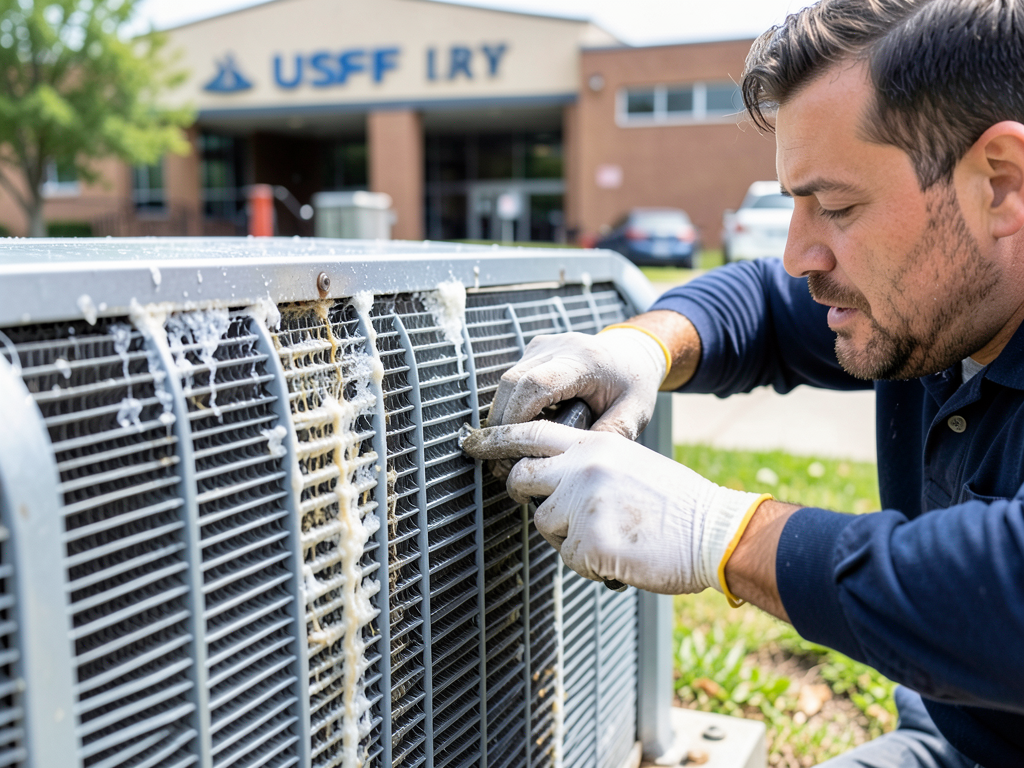
Improving AC Efficiency for Student Housing Near the USF Tampa Campus
Student apartments near the University of South Florida in Tampa face intense humidity and high cooling costs. Older AC systems in these rental homes struggle to keep up with Florida’s heat. This guide provides practical renter-friendly strategies to improve AC efficiency lower energy bills and stay comfortable without breaking lease terms. Florida Building Code Energy Conservation standards.
Why Tampa Student Housing AC Systems Struggle
Many student housing units near USF were built in the 1980s and 1990s with basic cooling systems not designed for today’s energy costs. The combination of salt air corrosion high latent heat loads and poor insulation creates a perfect storm for inefficient cooling. Understanding these local challenges is the first step to solving them. USF Office of Sustainability.
Understanding Tampa’s Unique AC Challenges
Tampa’s climate creates specific problems for student housing AC systems. The high relative humidity often 80-90% means your AC works harder to remove moisture than to cool air. Salt air from nearby coastal areas accelerates condenser coil corrosion. Afternoon thunderstorms create rapid temperature swings that stress older systems.
According to the Florida Building Code Energy Conservation standards properly sized AC units should maintain indoor humidity below 55% to prevent mold growth and ensure comfort. Many student housing units near USF operate at 65% or higher humidity wasting energy and creating health hazards.
Quick Wins: Renter-Friendly Efficiency Tips
Optimize Your Thermostat Settings
Set your thermostat to 78°F when home and 82°F when away. Each degree above 72°F can save 3-5% on cooling costs. Use ceiling fans to create a wind-chill effect that makes 78°F feel like 72°F. Remember to switch fan direction to counterclockwise for summer cooling.. Read more about Cooling Your New Riverside Heights ADU or Mother-in-Law Suite Efficiently.
Master the Filter Game
Replace your AC filter every 30-45 days during summer. Use MERV 8-11 filters for the best balance of airflow and particle capture. Dirty filters force your system to work 15% harder increasing energy use and wear. Document filter changes with photos to show landlords if disputes arise.
Seal Air Leaks
Use weather stripping on doors and windows. Apply removable caulk to window frames for temporary sealing. Check for gaps around plumbing penetrations and electrical outlets. Even small leaks can increase cooling costs by 10-15%.
Advanced Strategies for Maximum Efficiency
Window Treatment Optimization
Install thermal curtains or cellular shades on south and west-facing windows. These reduce heat gain by 25-40%. Apply removable window film that blocks 80% of solar heat without blocking light. Reflective window treatments can reduce cooling costs by $15-25 per month in Tampa apartments.
Humidity Management
Run a dehumidifier in high-moisture areas like bathrooms and laundry rooms. Target 45-55% relative humidity. Use exhaust fans when cooking or showering. Consider portable dehumidifiers for bedrooms during peak summer months.
Smart Usage Patterns
Avoid using heat-generating appliances during peak cooling hours (2-6 PM). Cook outdoors or use microwave instead of oven. Run dishwasher and laundry at night. These changes can reduce cooling load by 5-8%.
Working With Your Landlord
Essential Maintenance Requests
Request annual AC tune-ups coil cleaning and refrigerant level checks. Document all communication in writing. Under Florida Landlord-Tenant Law landlords must maintain habitable conditions including functional cooling systems.
Professional Inspection Rights
Tenants have the right to request professional HVAC inspections if cooling issues persist. Keep records of temperature readings and humidity levels to support your case. TECO offers free energy audits that can identify efficiency problems. TECO Energy Programs.
Understanding Your AC System
SEER Ratings Matter
Older units (10-12 SEER) use 30-50% more energy than modern 16-18 SEER systems. Check your unit’s SEER rating on the manufacturer’s label. While you can’t replace the unit understanding its efficiency helps set realistic expectations.
Common Student Housing AC Problems
Refrigerant leaks dirty condenser coils and undersized units are common in older student housing. Listen for hissing sounds (refrigerant leaks) or ice on evaporator coils (airflow restrictions). These issues require professional repair. Troubleshooting AC Issues.
Tampa-Specific Resources
TECO Energy Programs
TECO offers free home energy audits for renters and homeowners. Their Peak Savings program provides bill credits for reducing usage during high-demand periods. Visit TECO’s website or call their customer service for details. Who to Call for 24-Hour AC Service in New Tampa When the Temperature Starts Climbing.
USF Sustainability Resources
The USF Office of Sustainability provides energy-saving workshops and resources for students. They partner with local utilities on efficiency programs specifically for the campus area.
Cost-Saving Comparison Table
| Strategy | Estimated Monthly Savings | Implementation Cost | Difficulty |
|---|---|---|---|
| Thermostat Optimization | $15-25 | $0 | Easy |
| Filter Replacement | $10-20 | $5-10/month | Easy |
| Window Treatments | $20-35 | $50-150 upfront | Medium |
| Dehumidifier Use | $10-15 | $150-300 upfront | Medium |
| Weather Sealing | $8-12 | $20-40 | Easy |
Emergency Troubleshooting Guide
When your AC stops working follow this checklist before calling for service:
- Check thermostat batteries and settings
- Inspect and replace air filter
- Clear debris from outdoor unit
- Check circuit breakers
- Listen for unusual noises
Seasonal Maintenance Calendar
Follow this schedule to maintain peak efficiency:
- January: Schedule professional inspection
- March: Replace filter clean vents
- May: Check refrigerant lines clean coils
- July: Monitor humidity levels adjust settings
- September: Prepare for fall check for leaks
Common Myths Debunked
Myth: Closing vents in unused rooms saves energy. Reality: This creates pressure imbalances and can damage your system.
Myth: Bigger AC units cool better. Reality: Oversized units short-cycle reducing efficiency and humidity control.
Myth: Fans cool rooms. Reality: Fans cool people not spaces. Turn them off when leaving.
When to Call a Professional
Call Peak HVAC at (656) 237-5377 if you notice:
- System running constantly without reaching set temperature
- Unusual noises or smells
- Water leaks around indoor unit
- Ice formation on coils
- Electric bills spiking unexpectedly
Professional technicians can diagnose refrigerant issues electrical problems and mechanical failures that DIY fixes can’t solve.
Building a Case for Upgrades
If your landlord is hesitant about efficiency improvements present this data:
Modern 16 SEER systems can reduce cooling costs by 30-40% compared to 10 SEER units common in student housing. Over a 5-year lease this could save $1,500-2,500 in energy costs. Many utility companies offer rebates for efficiency upgrades.
Frequently Asked Questions
Can I install a window AC unit in my rental?
Most leases prohibit window units due to electrical and structural concerns. Always get written permission from your landlord before installing any additional cooling equipment.
How often should my landlord service the AC?
Florida law requires landlords to maintain habitable conditions. Request annual professional maintenance especially for units over 10 years old.
Are portable AC units worth it?
Portable units can provide supplemental cooling but are less efficient than central systems. They work best for spot cooling specific rooms rather than whole-apartment cooling.
Conclusion: Taking Control of Your Cooling Costs
Improving AC efficiency in USF Tampa student housing requires a combination of smart habits minor upgrades and professional maintenance. By implementing these strategies you can reduce your energy bills by 20-30% while staying comfortable during Tampa’s brutal summers.
Start with the easy wins like thermostat optimization and filter replacement then progress to window treatments and humidity control. Document everything and communicate clearly with your landlord about maintenance needs.
Ready to maximize your AC efficiency? Call Peak HVAC at (656) 237-5377 today to schedule a professional inspection. Our experienced technicians understand the unique challenges of Tampa student housing and can help you stay cool without breaking the bank.
Don’t wait until your system fails during finals week. Pick up the phone and call (656) 237-5377 before the next heat wave hits. Your comfort and your wallet will thank you.
{
“@context”: “https://schema.org”,
“@type”: “BlogPosting”,
“headline”: “Improving AC Efficiency for Student Housing Near the USF Tampa Campus”,
“description”: “Lower energy bills and stay cool in USF Tampa student housing with proven AC efficiency strategies. Local tips for renters near the University of South Florida.”,
“wordCount”: 1247,
“datePublished”: “2026-06-05T14:42:00.000Z”,
“dateModified”: “2026-06-05T14:42:00.000Z”,
“inLanguage”: “en-US”,
“mainEntityOfPage”: {
“@type”: “WebPage”,
“@id”: “https://peakhvactampa.com”
},
“publisher”: {
“@type”: “LocalBusiness”,
“name”: “Peak HVAC Tampa”,
“url”: “https://peakhvactampa.com”
},
“author”: {
“@type”: “Organization”,
“name”: “Peak HVAC Tampa”,
“url”: “https://peakhvactampa.com”
},
“image”: {
“@type”: “ImageObject”,
“url”: “https://peakhvactampa.com/wp-content/uploads/2026/03/improving-ac-efficiency-for-student-housing-near-t-1.png”
}
}
{
“@context”: “https://schema.org”,
“@type”: “HVACBusiness”,
“name”: “Peak HVAC Tampa”,
“url”: “https://peakhvactampa.com”,
“address”: {
“@type”: “PostalAddress”,
“addressLocality”: “Tampa”
},
“areaServed”: {
“@type”: “City”,
“name”: “Tampa”
}
}
{
“@context”: “https://schema.org”,
“@type”: “FAQPage”,
“mainEntity”: [
{
“@type”: “Question”,
“name”: “Can I install a window AC unit in my rental?”,
“acceptedAnswer”: {
“@type”: “Answer”,
“text”: “Most leases prohibit window units due to electrical and structural concerns. Always get written permission from your landlord before installing any additional cooling equipment.”
}
},
{
“@type”: “Question”,
“name”: “How often should my landlord service the AC?”,
“acceptedAnswer”: {
“@type”: “Answer”,
“text”: “Florida law requires landlords to maintain habitable conditions. Request annual professional maintenance especially for units over 10 years old.”
}
},
{
“@type”: “Question”,
“name”: “Are portable AC units worth it?”,
“acceptedAnswer”: {
“@type”: “Answer”,
“text”: “Portable units can provide supplemental cooling but are less efficient than central systems. They work best for spot cooling specific rooms rather than whole-apartment cooling.”
}
}
]
}
{
“@context”: “https://schema.org”,
“@type”: “BreadcrumbList”,
“itemListElement”: [
{
“@type”: “ListItem”,
“position”: 1,
“name”: “Home”,
“item”: “https://peakhvactampa.com”
},
{
“@type”: “ListItem”,
“position”: 2,
“name”: “Blog”,
“item”: “https://peakhvactampa.com/blog”
},
{
“@type”: “ListItem”,
“position”: 3,
“name”: “Improving AC Efficiency for Student Housing Near the USF Tampa Campus”
}
]
}
{
“@context”: “https://schema.org”,
“@type”: “Service”,
“serviceType”: “HVAC”,
“provider”: {
“@type”: “LocalBusiness”,
“name”: “Peak HVAC Tampa”,
“url”: “https://peakhvactampa.com”
},
“areaServed”: {
“@type”: “City”,
“name”: “Tampa”
},
“description”: “Lower energy bills and stay cool in USF Tampa student housing with proven AC efficiency strategies. Local tips for renters near the University of South Florida.”
}