
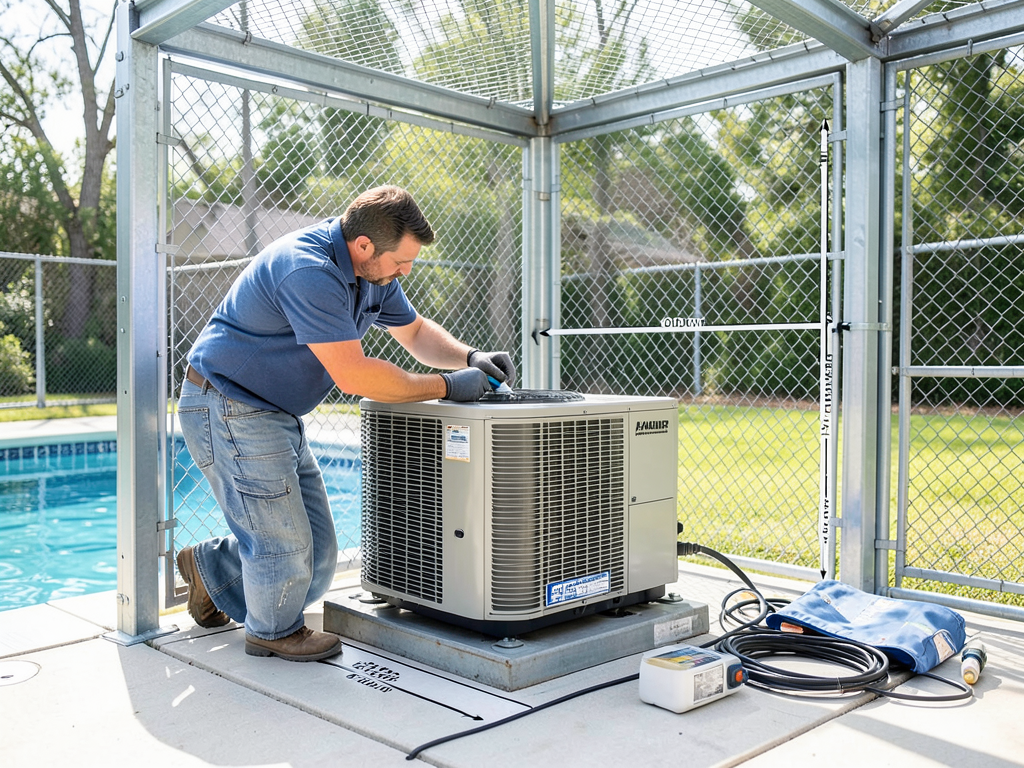
Does Your New Pool Cage in Carrollwood Village Change How Your AC Works
Your new pool cage in Carrollwood Village might be perfect for keeping bugs out and creating a comfortable outdoor space, but it could also be affecting your air conditioning system more than you realize. Many Tampa homeowners don’t realize that screen enclosures can restrict airflow, trap heat, and even cause salt-air corrosion on their outdoor AC units. Understanding these impacts can help you maintain comfort and efficiency in your Carrollwood home. Why Most Carrollwood Homeowners Choose Local HVAC Experts Over Big Box Brands.
When screen mesh surrounds your condenser unit, it creates a microclimate that’s often 5-10 degrees warmer than the open air. This trapped heat forces your AC to work harder, potentially increasing your energy bills by 10-15% and shortening your system’s lifespan. The good news is that with proper placement, regular maintenance, and awareness of clearance requirements, you can enjoy your pool cage without sacrificing cooling performance.
How Pool Cages Affect Your AC Performance
Pool cages and screen enclosures change the way air moves around your outdoor AC unit. The mesh acts as a barrier that can reduce airflow by 15-30% depending on the screen density and distance from the unit. This restriction forces your system to work harder to dissipate heat, which can lead to higher energy consumption and potential component stress.
The microclimate effect is particularly noticeable in Carrollwood’s humid climate. Screen enclosures trap warm air and moisture, creating a greenhouse effect that can raise ambient temperatures around your condenser by several degrees. This additional heat load means your AC must run longer cycles to achieve the same cooling effect inside your home.
Salt-air exposure is another concern for Carrollwood residents, especially those living near coastal areas or the bay. When your AC unit sits inside a pool cage, it’s still exposed to salt-laden air that can accelerate corrosion on coils, fins, and electrical components. The screen mesh doesn’t provide significant protection against this type of environmental damage.
Another factor to consider is debris accumulation. Pool cages can trap leaves, pollen, and other organic material around your AC unit. This debris can clog condenser coils, restrict airflow, and create ideal conditions for mold growth. Regular cleaning becomes even more important when your unit is enclosed.
The noise factor also changes with a pool cage installation. While the screen mesh can help muffle some of the operational sounds from your AC unit, it can also trap noise within the enclosure, potentially making it seem louder when you’re using your outdoor space.
The Physics of Airflow: How Screen Mesh Impacts Condenser Efficiency
Understanding how your AC works helps explain why pool cages matter. Your outdoor condenser unit relies on pulling large volumes of air across refrigerant coils to release heat from inside your home. This process requires unobstructed airflow to function efficiently.
Screen mesh creates resistance to airflow. A standard 18×14 mesh screen can reduce airflow velocity by approximately 20-25% compared to open air. This means your AC must work harder to move the same volume of air, which directly impacts energy efficiency and cooling capacity.
The concept of static pressure becomes important here. When air encounters resistance from screen mesh, it creates back pressure that your AC’s fan must overcome. This additional load can reduce your system’s SEER2 rating by 1-2 points, which translates to higher operating costs over time.
Heat exchange efficiency also decreases in enclosed spaces. Your condenser needs to release heat to the surrounding air, but when that air is already warm and stagnant, the heat transfer process becomes less effective. This is why units in enclosed spaces often run longer cycles and struggle to maintain optimal performance.
Air density changes with temperature also play a role. Warmer air inside a pool cage is less dense, which means it carries less heat away from your condenser coils. This creates a compounding effect where your system works harder in an environment that’s already compromised for heat dissipation.
Understanding these physics principles helps explain why proper clearance and ventilation are so critical when installing pool cages near HVAC equipment. The goal is to minimize airflow restriction while still enjoying the benefits of your screened enclosure.
Common Problems: Heat Recirculation and Static Pressure
Heat recirculation is one of the most common issues when AC units are placed inside or near pool cages. When your condenser releases hot air, that air needs somewhere to go. In open spaces, it dissipates naturally, but in enclosed areas, it can get trapped and cycle back through the unit. Troubleshooting AC Issues.
This recirculation creates a feedback loop where your AC is essentially trying to cool air that’s already been heated by the system. The result is longer run times, reduced cooling capacity, and increased wear on components. You might notice your system running constantly without ever achieving the desired indoor temperature.
Static pressure buildup is another significant concern. When air can’t flow freely around your condenser, it creates pressure zones that your system must work against. This additional resistance can cause your AC’s fan motor to work harder, potentially leading to premature failure of bearings and other moving parts.
Moisture accumulation is also problematic in enclosed spaces. Carrollwood’s high humidity means that moisture tends to collect in areas with poor air circulation. When your AC unit sits in a damp environment, it can lead to corrosion of electrical connections and reduced efficiency of heat exchange surfaces.
Debris buildup accelerates in enclosed spaces. Leaves, pine needles, and other organic matter tend to accumulate more readily around units that are partially protected by screens. This debris can restrict airflow through the condenser coils and create hot spots that reduce overall system efficiency.
Temperature stratification can occur in enclosed areas. Without proper air circulation, you might find that the air near the top of your pool cage is significantly warmer than the air near the ground. This temperature difference can create uneven cooling patterns and reduce your system’s overall effectiveness.
18×14 vs. 20×20 Mesh: Does Screen Density Matter for Your AC?
The type of screen mesh you choose can significantly impact your AC’s performance. The two most common options for pool cages are 18×14 and 20×20 mesh, and the differences between them matter more than you might think. How to Choose the Right New Air Conditioner for Your Westchase Home.
18×14 mesh has larger openings and allows approximately 15-20% more airflow than 20×20 mesh. This increased airflow can translate to better AC performance, especially in enclosed spaces where every bit of ventilation helps. However, 18×14 mesh also allows smaller insects to pass through, which might be a concern for some homeowners.
20×20 mesh provides finer filtration and better insect protection but creates more resistance to airflow. This denser mesh can reduce airflow by an additional 5-10% compared to 18×14 mesh. In Carrollwood’s humid climate, this difference can be significant for your AC’s efficiency.
Solar heat gain is another factor to consider. Darker screens, regardless of mesh density, can absorb more heat and potentially increase the temperature inside your pool cage. This additional heat can further stress your AC system, especially during Tampa’s hot summer months.
Wind resistance varies between mesh types. 20×20 mesh provides better wind protection, which can be beneficial during storms but may also trap more heat. 18×14 mesh allows more wind to pass through, which can help with natural ventilation but might allow more debris to enter your enclosure.
Maintenance requirements differ between mesh types. 20×20 mesh tends to trap more fine dust and pollen, requiring more frequent cleaning to maintain optimal airflow. 18×14 mesh may stay cleaner longer but can allow larger debris to pass through and potentially clog your AC unit.
Cost considerations also come into play. 20×20 mesh is typically more expensive than 18×14 mesh, but the price difference is usually minimal compared to the overall cost of your pool cage installation. The long-term energy savings from better AC performance might offset the initial cost difference.
Maintenance Tips for HVAC Units Inside Enclosures
Regular maintenance becomes even more critical when your AC unit is inside a pool cage. The enclosed environment can accelerate wear and reduce efficiency if you don’t stay on top of basic upkeep tasks.
Coil cleaning should be performed at least twice per year, and possibly more frequently if your pool cage is near trees or in a particularly dusty area. Use a garden hose with moderate pressure to remove debris from the condenser coils, being careful not to bend the delicate fins. Chemical coil cleaners can help remove stubborn buildup but should be used cautiously to avoid damaging surrounding vegetation.
Clearance maintenance is essential for proper airflow. Ensure there’s at least 24-36 inches of clearance around all sides of your AC unit, and up to 48 inches above it. This space allows for adequate air intake and exhaust. Trim any vegetation that grows too close to your unit, as plants can restrict airflow and trap moisture.
Electrical connections should be inspected annually for signs of corrosion, especially in Carrollwood’s humid climate. Salt air and moisture can cause connections to deteriorate, leading to poor performance or system failure. Look for green or white deposits on terminals and contact points.
Fan blade inspection is important for maintaining efficiency. Check for any signs of damage, imbalance, or debris buildup on the blades. Even small amounts of dirt or corrosion can throw off the balance and reduce your system’s efficiency.
Drain line maintenance prevents water damage and mold growth. Pool chemicals and high humidity can create conditions where algae and mold thrive in your AC’s drain lines. Flush these lines annually with a mixture of water and vinegar to prevent clogs and maintain proper drainage.
Refrigerant level checks should be performed by a professional technician every 1-2 years. Enclosed spaces can sometimes mask symptoms of low refrigerant, as the system may still provide some cooling even when levels are suboptimal. Proper refrigerant charge is essential for efficiency and longevity.
Consider installing a programmable thermostat if you don’t already have one. This allows you to optimize your AC’s operation based on your schedule and can help compensate for any efficiency losses caused by your pool cage installation.
Tampa Building Codes and Clearance Requirements
Understanding local building codes is crucial when installing pool cages near HVAC equipment. The Florida Building Code (FBC) has specific requirements that affect how close you can place screen enclosures to your AC unit. Florida Building Code.
According to the FBC Energy Conservation Code, HVAC equipment must maintain minimum clearances for proper operation. For residential air conditioners, the code typically requires 24 inches of clearance on all sides and 36-48 inches above the unit. These clearances ensure adequate airflow and access for maintenance.
Hillsborough County has additional requirements that may affect your pool cage installation. The county requires permits for screen enclosures over a certain size, and these permits include inspections to ensure compliance with ventilation and setback requirements. Always check with local authorities before beginning construction.
Wind load requirements in Tampa’s hurricane-prone area affect how pool cages must be constructed. Screen enclosures must be designed to withstand specific wind speeds, which can influence the type of framing and anchoring systems used. This structural integrity can indirectly impact your AC unit by providing better protection during storms.
Setback requirements from property lines also affect pool cage placement. You’ll need to ensure your enclosure doesn’t encroach on easements or violate setback rules, which could limit your options for positioning the cage relative to your AC equipment.
Electrical code requirements must be considered when planning your pool cage. Any electrical components associated with your AC unit must maintain proper clearances from the screen enclosure and meet National Electrical Code (NEC) requirements for outdoor installations.
Permitting processes in Carrollwood typically involve submitting detailed plans that show the location of your pool cage relative to existing structures, including your AC unit. This review process helps identify potential conflicts before construction begins.
Insurance considerations may also affect your decisions. Some insurance companies have specific requirements for screen enclosures and HVAC equipment placement, particularly regarding wind resistance and flood zones. Check with your insurance provider to understand any requirements that might affect your installation.
Expert Verdict: To Cage or Not to Cage?
After considering all the factors, the verdict on whether to install a pool cage near your AC unit isn’t black and white. The answer depends on your specific situation, priorities, and willingness to maintain your system properly.
If you prioritize aesthetics and outdoor living space, a pool cage can be worth the minor efficiency trade-offs. The benefits of bug-free outdoor areas, reduced debris in your pool, and enhanced property value often outweigh the 10-15% potential increase in cooling costs. However, you’ll need to commit to regular maintenance and possibly accept slightly higher energy bills.
For homeowners who are particularly energy-conscious or live in areas with extreme heat, keeping your AC unit in open air might be the better choice. The 5-10% efficiency gain from unrestricted airflow can add up over time, especially in Carrollwood’s long cooling season.
The middle ground option involves strategic placement. Consider installing your pool cage so that it provides coverage for your pool area while leaving your AC unit in open air, or use partial screening that reduces but doesn’t eliminate airflow around your condenser.
Professional installation makes a significant difference. An experienced contractor can design your pool cage to minimize impacts on your AC system, incorporating features like ventilation panels or strategic placement that maintains adequate clearances while still providing the benefits of enclosure.
Future planning is also important. If you’re considering replacing your AC unit in the next few years, factor in how a pool cage might affect the efficiency of newer, more sensitive equipment. Modern high-efficiency units are often more sensitive to airflow restrictions than older models.
Climate considerations specific to Carrollwood should influence your decision. Our area’s high humidity and occasional salt air exposure mean that any system protecting your AC from these elements might actually extend its lifespan, potentially offsetting efficiency losses from restricted airflow.
Maintenance commitment is perhaps the most critical factor. If you’re willing to perform or pay for regular maintenance, including coil cleaning, clearance checks, and system inspections, a pool cage is less likely to cause significant problems for your AC system.
Energy cost analysis can help you make a data-driven decision. Calculate the potential efficiency loss against the benefits you’ll gain from the pool cage. In many cases, the lifestyle improvements justify a modest increase in operating costs.
Call (656) 237-5377 today to schedule your inspection. Our technicians can evaluate your current setup and provide specific recommendations for your Carrollwood home. Don’t wait until minor issues become major problems.
Frequently Asked Questions
Will a pool cage void my AC warranty?
Most manufacturers won’t void your warranty simply because you installed a pool cage, but they may deny coverage if the enclosure caused damage due to restricted airflow or lack of maintenance. Always maintain proper clearances and follow manufacturer guidelines to protect your warranty.
How much clearance does my AC need around a pool cage?
Industry standards recommend at least 24 inches of clearance on all sides and 36-48 inches above your AC unit. More clearance is better, especially in humid climates like Carrollwood where airflow is already restricted. Never allow vegetation or structures to grow within these minimum distances.
Can I install a pool cage over my existing AC unit?
It’s not recommended to completely enclose your AC unit within a pool cage. If you must have the unit inside the enclosure, ensure there are ventilation panels or openings that maintain adequate airflow. Professional installation is crucial to avoid creating heat traps that reduce efficiency.
How often should I clean my AC coils if they’re inside a pool cage?
AC coils in enclosed spaces typically need cleaning every 3-4 months instead of annually. The enclosed environment traps more debris and creates conditions where buildup occurs faster. Regular cleaning maintains efficiency and prevents premature component failure.
Does screen mesh color affect AC performance?
Yes, darker screen colors absorb more heat and can increase the temperature inside your pool cage by 5-10 degrees. This additional heat puts more stress on your AC system. Lighter colors reflect more heat but may show dirt more readily, requiring more frequent cleaning.
What’s the best way to protect my AC from salt air in Carrollwood?
Regular coil cleaning, applying protective coatings designed for coastal environments, and ensuring proper drainage around your unit are the best defenses against salt air corrosion. Even with a pool cage, salt-laden air can reach your equipment, so proactive maintenance is essential.
Can I install a pool cage myself to save money?
DIY pool cage installation is risky and may violate local building codes. Professional installation ensures proper structural integrity, meets wind load requirements, and considers factors like HVAC clearance that amateurs might overlook. The cost savings rarely justify the potential risks and code violations.
How do I know if my pool cage is affecting my AC efficiency?
Signs include longer cooling cycles, higher energy bills, warm air from vents, or ice formation on refrigerant lines. A professional HVAC technician can measure airflow and temperature differentials to determine if your enclosure is causing significant efficiency losses.
Are there AC units designed to work better with pool cages?
Some high-efficiency units are more sensitive to airflow restrictions, while others are designed with more robust fans that can overcome some enclosure-related resistance. If you know you’ll be installing a pool cage, discuss your plans with your HVAC contractor to select equipment that will work best in your specific situation.
What’s the average cost increase for cooling with a pool cage?
Most homeowners see a 10-15% increase in cooling costs when their AC unit is partially enclosed by a pool cage. This translates to approximately $15-30 more per month during peak cooling season, though actual costs vary based on your specific setup and local electricity rates.
Should I consider a different AC unit if I’m installing a pool cage?
If you’re planning both projects simultaneously, discuss your pool cage plans with your HVAC contractor. They might recommend a unit with slightly higher capacity or different features that will perform better in an enclosed environment. This coordination can prevent efficiency issues later.
How does humidity affect AC units in pool cages?
Carrollwood’s high humidity means that pool cages can trap moisture around your AC unit, potentially leading to corrosion and mold growth. Proper ventilation and regular maintenance become even more critical in humid environments to prevent these moisture-related issues.
Can pool chemicals damage my AC unit?
Pool chemicals, especially chlorine, can accelerate corrosion on aluminum components and damage electrical connections. When your AC is inside a pool cage, it’s exposed to chemical off-gassing. Ensure proper ventilation and consider using corrosion-resistant coatings on vulnerable components.
What maintenance tasks should I perform monthly?
Monthly tasks should include checking and clearing debris from around your unit, ensuring screens or ventilation panels aren’t blocked, and visually inspecting for signs of corrosion or damage. Also check that the area around your unit remains clear of vegetation growth.
Is it worth installing a pool cage if I’m concerned about AC efficiency?
For most homeowners, the lifestyle benefits of a pool cage outweigh the modest efficiency losses. The key is proper installation, adequate clearances, and committed maintenance. If you’re still concerned, consider partial screening or strategic placement that protects your pool area while keeping your AC unit in open air.
How long do AC units typically last with pool cages?
With proper maintenance, AC units in pool cages typically last 12-15 years, compared to 15-20 years for units in open air. The reduced lifespan is due to increased operating stress and environmental factors. Regular professional maintenance can help maximize your system’s longevity.
Should I install ceiling fans in my pool cage?
Ceiling fans can help circulate air and reduce the temperature around your AC unit, potentially offsetting some efficiency losses from the enclosure. They also make your outdoor space more comfortable. Just ensure they’re installed with proper electrical safety for outdoor use in humid environments.
What’s the best screen material for minimizing AC impact?
Fiberglass screens offer good airflow and are less prone to corrosion than metal screens. Solar screen fabrics can reduce heat gain while maintaining adequate airflow. Discuss your specific needs with your pool cage contractor to select the best material for your situation.
How do I balance pool cage benefits with AC efficiency?
The key is finding the right balance between enclosure benefits and system performance. This might mean partial screening, strategic unit placement, or investing in a slightly larger AC unit to compensate for efficiency losses. Professional consultation can help you find the optimal solution for your specific needs.
Pick up the phone and call (656) 237-5377 before the next storm hits. Our team at Peak HVAC Tampa can assess your current setup and recommend solutions that protect both your comfort and your investment. Don’t let pool cage problems leave you sweating this summer. For more information, visit U.S. Department of Energy.
{
“@context”: “https://schema.org”,
“@type”: “BlogPosting”,
“headline”: “Does Your New Pool Cage in Carrollwood Village Change How Your AC Works”,
“description”: “Find out how a pool cage in Carrollwood Village can affect your AC efficiency. Learn about airflow, heat buildup, and maintenance tips for screened enclosures.”,
“wordCount”: 3524,
“datePublished”: “2026-05-27T07:06:00.000Z”,
“dateModified”: “2026-05-27T07:06:00.000Z”,
“inLanguage”: “en-US”,
“mainEntityOfPage”: {
“@type”: “WebPage”,
“@id”: “https://peakhvactampa.com”
},
“publisher”: {
“@type”: “LocalBusiness”,
“name”: “Peak HVAC Tampa”,
“url”: “https://peakhvactampa.com”
},
“author”: {
“@type”: “Organization”,
“name”: “Peak HVAC Tampa”,
“url”: “https://peakhvactampa.com”
},
“image”: {
“@type”: “ImageObject”,
“url”: “https://peakhvactampa.com/wp-content/uploads/2026/03/does-your-new-pool-cage-in-carrollwood-village-cha-1.png”
}
}
{
“@context”: “https://schema.org”,
“@type”: “HVACBusiness”,
“name”: “Peak HVAC Tampa”,
“url”: “https://peakhvactampa.com”,
“address”: {
“@type”: “PostalAddress”,
“addressLocality”: “Tampa”
},
“areaServed”: {
“@type”: “City”,
“name”: “Tampa”
}
}
{
“@context”: “https://schema.org”,
“@type”: “FAQPage”,
“mainEntity”: [
{
“@type”: “Question”,
“name”: “18×14 vs. 20×20 Mesh: Does Screen Density Matter for Your AC?”,
“acceptedAnswer”: {
“@type”: “Answer”,
“text”: “The type of screen mesh you choose can significantly impact your AC’s performance. The two most common options for pool cages are 18×14 and 20×20 mesh, and the differences between them matter more than you might think. How to Choose the Right New Air Conditioner for Your Westchase Home.”
}
},
{
“@type”: “Question”,
“name”: “Expert Verdict: To Cage or Not to Cage?”,
“acceptedAnswer”: {
“@type”: “Answer”,
“text”: “After considering all the factors, the verdict on whether to install a pool cage near your AC unit isn’t black and white. The answer depends on your specific situation, priorities, and willingness to maintain your system properly.”
}
},
{
“@type”: “Question”,
“name”: “Will a pool cage void my AC warranty?”,
“acceptedAnswer”: {
“@type”: “Answer”,
“text”: “Most manufacturers won’t void your warranty simply because you installed a pool cage, but they may deny coverage if the enclosure caused damage due to restricted airflow or lack of maintenance. Always maintain proper clearances and follow manufacturer guidelines to protect your warranty.”
}
},
{
“@type”: “Question”,
“name”: “How much clearance does my AC need around a pool cage?”,
“acceptedAnswer”: {
“@type”: “Answer”,
“text”: “Industry standards recommend at least 24 inches of clearance on all sides and 36-48 inches above your AC unit. More clearance is better, especially in humid climates like Carrollwood where airflow is already restricted. Never allow vegetation or structures to grow within these minimum distances.”
}
},
{
“@type”: “Question”,
“name”: “Can I install a pool cage over my existing AC unit?”,
“acceptedAnswer”: {
“@type”: “Answer”,
“text”: “It’s not recommended to completely enclose your AC unit within a pool cage. If you must have the unit inside the enclosure, ensure there are ventilation panels or openings that maintain adequate airflow. Professional installation is crucial to avoid creating heat traps that reduce efficiency.”
}
},
{
“@type”: “Question”,
“name”: “How often should I clean my AC coils if they’re inside a pool cage?”,
“acceptedAnswer”: {
“@type”: “Answer”,
“text”: “AC coils in enclosed spaces typically need cleaning every 3-4 months instead of annually. The enclosed environment traps more debris and creates conditions where buildup occurs faster. Regular cleaning maintains efficiency and prevents premature component failure.”
}
},
{
“@type”: “Question”,
“name”: “Does screen mesh color affect AC performance?”,
“acceptedAnswer”: {
“@type”: “Answer”,
“text”: “Yes, darker screen colors absorb more heat and can increase the temperature inside your pool cage by 5-10 degrees. This additional heat puts more stress on your AC system. Lighter colors reflect more heat but may show dirt more readily, requiring more frequent cleaning.”
}
},
{
“@type”: “Question”,
“name”: “What’s the best way to protect my AC from salt air in Carrollwood?”,
“acceptedAnswer”: {
“@type”: “Answer”,
“text”: “Regular coil cleaning, applying protective coatings designed for coastal environments, and ensuring proper drainage around your unit are the best defenses against salt air corrosion. Even with a pool cage, salt-laden air can reach your equipment, so proactive maintenance is essential.”
}
},
{
“@type”: “Question”,
“name”: “Can I install a pool cage myself to save money?”,
“acceptedAnswer”: {
“@type”: “Answer”,
“text”: “DIY pool cage installation is risky and may violate local building codes. Professional installation ensures proper structural integrity, meets wind load requirements, and considers factors like HVAC clearance that amateurs might overlook. The cost savings rarely justify the potential risks and code violations.”
}
},
{
“@type”: “Question”,
“name”: “Are there AC units designed to work better with pool cages?”,
“acceptedAnswer”: {
“@type”: “Answer”,
“text”: “Some high-efficiency units are more sensitive to airflow restrictions, while others are designed with more robust fans that can overcome some enclosure-related resistance. If you know you’ll be installing a pool cage, discuss your plans with your HVAC contractor to select equipment that will work best in your specific situation.”
}
},
{
“@type”: “Question”,
“name”: “What’s the average cost increase for cooling with a pool cage?”,
“acceptedAnswer”: {
“@type”: “Answer”,
“text”: “Most homeowners see a 10-15% increase in cooling costs when their AC unit is partially enclosed by a pool cage. This translates to approximately $15-30 more per month during peak cooling season, though actual costs vary based on your specific setup and local electricity rates.”
}
},
{
“@type”: “Question”,
“name”: “Should I consider a different AC unit if I’m installing a pool cage?”,
“acceptedAnswer”: {
“@type”: “Answer”,
“text”: “If you’re planning both projects simultaneously, discuss your pool cage plans with your HVAC contractor. They might recommend a unit with slightly higher capacity or different features that will perform better in an enclosed environment. This coordination can prevent efficiency issues later.”
}
},
{
“@type”: “Question”,
“name”: “How does humidity affect AC units in pool cages?”,
“acceptedAnswer”: {
“@type”: “Answer”,
“text”: “Carrollwood’s high humidity means that pool cages can trap moisture around your AC unit, potentially leading to corrosion and mold growth. Proper ventilation and regular maintenance become even more critical in humid environments to prevent these moisture-related issues.”
}
},
{
“@type”: “Question”,
“name”: “Can pool chemicals damage my AC unit?”,
“acceptedAnswer”: {
“@type”: “Answer”,
“text”: “Pool chemicals, especially chlorine, can accelerate corrosion on aluminum components and damage electrical connections. When your AC is inside a pool cage, it’s exposed to chemical off-gassing. Ensure proper ventilation and consider using corrosion-resistant coatings on vulnerable components.”
}
},
{
“@type”: “Question”,
“name”: “What maintenance tasks should I perform monthly?”,
“acceptedAnswer”: {
“@type”: “Answer”,
“text”: “Monthly tasks should include checking and clearing debris from around your unit, ensuring screens or ventilation panels aren’t blocked, and visually inspecting for signs of corrosion or damage. Also check that the area around your unit remains clear of vegetation growth.”
}
},
{
“@type”: “Question”,
“name”: “Is it worth installing a pool cage if I’m concerned about AC efficiency?”,
“acceptedAnswer”: {
“@type”: “Answer”,
“text”: “For most homeowners, the lifestyle benefits of a pool cage outweigh the modest efficiency losses. The key is proper installation, adequate clearances, and committed maintenance. If you’re still concerned, consider partial screening or strategic placement that protects your pool area while keeping your AC unit in open air.”
}
},
{
“@type”: “Question”,
“name”: “How long do AC units typically last with pool cages?”,
“acceptedAnswer”: {
“@type”: “Answer”,
“text”: “With proper maintenance, AC units in pool cages typically last 12-15 years, compared to 15-20 years for units in open air. The reduced lifespan is due to increased operating stress and environmental factors. Regular professional maintenance can help maximize your system’s longevity.”
}
},
{
“@type”: “Question”,
“name”: “Should I install ceiling fans in my pool cage?”,
“acceptedAnswer”: {
“@type”: “Answer”,
“text”: “Ceiling fans can help circulate air and reduce the temperature around your AC unit, potentially offsetting some efficiency losses from the enclosure. They also make your outdoor space more comfortable. Just ensure they’re installed with proper electrical safety for outdoor use in humid environments.”
}
},
{
“@type”: “Question”,
“name”: “What’s the best screen material for minimizing AC impact?”,
“acceptedAnswer”: {
“@type”: “Answer”,
“text”: “Fiberglass screens offer good airflow and are less prone to corrosion than metal screens. Solar screen fabrics can reduce heat gain while maintaining adequate airflow. Discuss your specific needs with your pool cage contractor to select the best material for your situation.”
}
},
{
“@type”: “Question”,
“name”: “How do I balance pool cage benefits with AC efficiency?”,
“acceptedAnswer”: {
“@type”: “Answer”,
“text”: “The key is finding the right balance between enclosure benefits and system performance. This might mean partial screening, strategic unit placement, or investing in a slightly larger AC unit to compensate for efficiency losses. Professional consultation can help you find the optimal solution for your specific needs.”
}
}
]
}
{
“@context”: “https://schema.org”,
“@type”: “BreadcrumbList”,
“itemListElement”: [
{
“@type”: “ListItem”,
“position”: 1,
“name”: “Home”,
“item”: “https://peakhvactampa.com”
},
{
“@type”: “ListItem”,
“position”: 2,
“name”: “Blog”,
“item”: “https://peakhvactampa.com/blog”
},
{
“@type”: “ListItem”,
“position”: 3,
“name”: “Does Your New Pool Cage in Carrollwood Village Change How Your AC Works”
}
]
}
{
“@context”: “https://schema.org”,
“@type”: “Service”,
“serviceType”: “HVAC”,
“provider”: {
“@type”: “LocalBusiness”,
“name”: “Peak HVAC Tampa”,
“url”: “https://peakhvactampa.com”
},
“areaServed”: {
“@type”: “City”,
“name”: “Tampa”
},
“description”: “Find out how a pool cage in Carrollwood Village can affect your AC efficiency. Learn about airflow, heat buildup, and maintenance tips for screened enclosures.”
}