
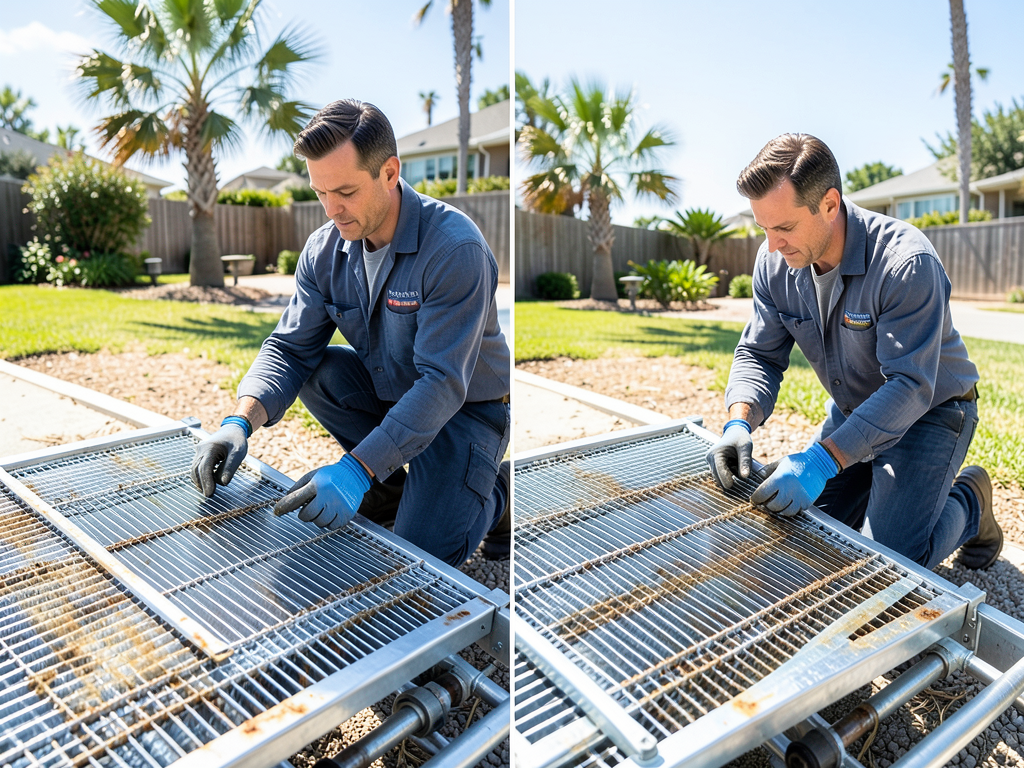
Protecting Your AC Condenser from Dog Urine Damage in Dog-Friendly Beach Park
Your AC condenser sits outside exposed to the elements. In Beach Park’s dog-friendly community, that means it also faces a unique threat: dog urine damage. The combination of Tampa’s humidity and concentrated nitrogen from pet waste creates a perfect storm for corrosion that can destroy your outdoor unit.
Dog urine contains concentrated ammonia and nitrogen compounds. When dogs repeatedly mark your condenser unit, these chemicals eat away at the aluminum fins and copper tubing. The damage starts small but accelerates quickly in our coastal climate where salt air already stresses metal components.
Beach Park residents know the neighborhood’s charm comes with certain challenges. Many homes sit on smaller lots where condenser units sit just feet from fenced yards. This proximity makes protection essential. Without intervention, you could face expensive repairs or complete system replacement within 2-3 years of consistent urine exposure. EPA refrigerant handling regulations.
Call (656) 237-5377 today to schedule your inspection. Our technicians can assess existing damage and recommend protective solutions before minor corrosion becomes a major system failure.
Why Beach Park Condensers Face Higher Risk
Beach Park’s layout creates perfect conditions for condenser damage. Homes built in the 1950s and 1960s often have outdoor units positioned near property lines. Many yards feature decorative fencing that concentrates pet activity in specific zones.
The neighborhood’s proximity to Tampa Bay means your condenser already battles salt air corrosion. Dog urine adds another chemical attack vector. The nitrogen compounds in urine react with aluminum fins, creating pitting that starts invisible but grows into holes.
Beach Park’s warm climate means air conditioners run nearly year-round. This constant operation keeps condenser coils warm, which accelerates chemical reactions between urine compounds and metal surfaces. The result is damage that progresses faster than in cooler climates.
Local soil conditions also matter. Beach Park’s sandy soil drains quickly but doesn’t filter chemicals effectively. When dogs urinate near your unit, the waste products concentrate rather than dispersing, creating a persistent corrosive environment.
Signs Your Condenser Suffers Urine Damage
Early detection prevents costly repairs. Watch for these warning signs around your Beach Park home:
- White or greenish powder on aluminum fins
- Brown or black spots on copper tubing
- Reduced cooling performance despite clean filters
- Unusual hissing sounds from the outdoor unit
- Higher energy bills without increased usage
The white powder indicates aluminum corrosion. This powdery substance forms when urine compounds eat through the protective oxide layer on aluminum fins. Once this layer breaks down, corrosion accelerates rapidly.
Brown spots on copper tubing signal more advanced damage. These areas often indicate refrigerant leaks where urine compounds have eaten through the copper walls. You might notice your system struggling to maintain cool temperatures or running constantly without achieving the set point.
Listen for hissing sounds during operation. This noise often means refrigerant escapes through corroded holes. The sound resembles air escaping from a tire and typically occurs when the compressor activates.
Watch your energy bills. A damaged condenser works harder to reject heat, consuming more electricity while delivering less cooling. If your Beach Park home feels warm despite normal thermostat settings, urine damage could be the culprit.
How Urine Damages AC Components
Understanding the damage process helps you prevent it. Dog urine attacks your condenser through several mechanisms:
The ammonia in urine creates a highly alkaline environment. This alkalinity dissolves the protective oxide layer on aluminum fins within hours of contact. Once exposed, the raw aluminum corrodes rapidly, especially in Tampa’s humid air.
Nitrogen compounds in urine act as oxidizers. They accelerate the breakdown of copper tubing through a process similar to acid rain corrosion. The concentrated nature of pet waste makes this damage more severe than general atmospheric corrosion.
Urine’s salt content compounds the problem. Combined with coastal salt air, the total salt exposure overwhelms the condenser’s protective coatings. This creates microscopic pits that grow into larger holes over time.
Temperature cycling worsens the damage. When your AC runs, the condenser heats up. This heat accelerates chemical reactions between urine compounds and metal surfaces. At night, cooling creates condensation that traps corrosive compounds against the metal.
Prevention Strategies for Beach Park Homes
Protecting your condenser requires a multi-layered approach. Start with physical barriers that keep dogs away without blocking airflow.
Install a decorative fence around your condenser. Choose materials like vinyl or powder-coated aluminum that won’t rust or corrode. Position the fence 24-30 inches from the unit to maintain proper airflow while preventing direct contact. How to Choose the Right New Air Conditioner for Your Westchase Home.
Consider a raised concrete pad for your condenser. This elevates the unit above ground level where dogs typically mark. The pad also improves drainage and prevents soil moisture from accelerating corrosion.
Apply protective coatings to vulnerable components. Specialized HVAC coatings create a barrier between metal surfaces and corrosive compounds. These coatings need reapplication every 2-3 years in Beach Park’s harsh environment.
Train your pets to avoid the condenser area. Use positive reinforcement to create new bathroom habits. Many Beach Park residents successfully redirect their dogs to specific yard areas away from HVAC equipment.
Cleaning and Maintenance Solutions
If damage occurs, prompt action prevents system failure. Professional cleaning removes corrosive buildup and assesses repair needs.
Our technicians use specialized cleaning solutions that neutralize urine compounds without damaging aluminum fins. The process involves gentle pressure washing combined with chemical treatments that restore the protective oxide layer.
For minor damage, fin combing straightens bent aluminum fins while removing surface corrosion. This improves airflow and heat transfer efficiency. Severely damaged fins may require replacement of the entire coil assembly.
Copper tubing damage requires more extensive repairs. Small leaks can be brazed, but widespread corrosion often necessitates coil replacement. Our technicians use electronic leak detectors to identify all damage points before recommending repairs.
Regular maintenance prevents minor issues from becoming major problems. Schedule professional cleaning annually, preferably before the cooling season begins. This timing allows technicians to identify and address damage before peak usage strains the system. Troubleshooting AC Issues.
Cost Considerations for Beach Park Residents
Understanding repair costs helps you make informed decisions. Beach Park’s unique environment affects pricing for condenser repairs and protection.
Protective fence installation typically costs $300-600, depending on materials and design. Vinyl fences offer the best durability against Tampa’s weather while requiring minimal maintenance.
Professional cleaning services range from $150-300. This includes chemical treatment, pressure washing, and inspection for damage. Annual cleaning prevents more expensive repairs later. Who to Call for 24-Hour AC Service in New Tampa When the Temperature Starts Climbing.
Coil replacement costs vary significantly based on damage extent. A damaged condenser coil replacement averages $900-1,800 in Beach Park, reflecting the additional labor needed to work in tight spaces common to older homes.
Full system replacement becomes necessary when damage extends to the compressor or when the unit is over 10 years old. New high-efficiency systems cost $3,500-6,000 but offer significant energy savings and improved reliability.
Insurance and Warranty Coverage
Many Beach Park homeowners wonder about insurance coverage for urine damage. Standard policies typically exclude damage from pet waste, considering it preventable through proper maintenance. Why Most Carrollwood Homeowners Choose Local HVAC Experts Over Big Box Brands.
However, damage from covered events might include secondary urine damage. For example, if a hurricane damages your fence allowing dogs access to the condenser, resulting urine damage might be covered as part of the overall claim.
Manufacturer warranties rarely cover urine damage. Most warranties exclude damage from chemicals, animals, or improper maintenance. However, some extended warranties might offer coverage for certain types of corrosion if properly documented.
Document all damage with photos and professional assessments. This documentation proves valuable if you need to file claims or dispute warranty denials. Keep records of all maintenance and repairs as proof of proper care.
Professional Assessment Process
Our technicians follow a comprehensive assessment protocol when evaluating urine damage in Beach Park homes.
We start with a visual inspection using specialized lighting that highlights corrosion patterns invisible to the naked eye. This reveals early damage before it affects system performance.
Electronic leak detection identifies refrigerant leaks with precision. Our technicians use heated diode detectors that sense even tiny refrigerant concentrations, pinpointing leak locations without destructive testing.
Pressure testing confirms system integrity. We isolate sections of the refrigerant circuit and apply nitrogen pressure to identify leaks that might not be active during the inspection.
Airflow analysis measures how damage affects system efficiency. We use anemometers to test airflow through damaged fins and calculate the impact on heat transfer capacity.
Long-Term Protection Strategies
Protecting your investment requires ongoing attention. Beach Park’s environment demands specific long-term strategies.
Schedule biannual inspections if your home has multiple dogs or sits near the water. These inspections catch damage early when repairs cost less and system downtime is minimal.
Consider upgrading to corrosion-resistant components if your unit is over 8 years old. Modern condensers feature enhanced coatings and materials designed for coastal environments. The upgrade cost often pays for itself through improved efficiency and reliability.
Install a smart thermostat that monitors system performance. These devices detect efficiency drops that might indicate developing problems. Early warnings allow you to address issues before they cause system failure.
Join a maintenance program that includes priority service and discounted repairs. Regular professional attention prevents minor issues from becoming emergencies, especially important in Beach Park’s demanding climate.
Beach Park-Specific Environmental Factors
Beach Park’s unique characteristics affect how you protect your AC system. Understanding these factors helps you make better decisions.
The neighborhood’s elevation sits just above sea level. This low elevation means high water tables that affect soil moisture around your condenser. Elevated pads become even more important to prevent water-related corrosion.
Beach Park’s mature tree canopy creates shade but also drops debris on condenser units. This organic material traps moisture and corrosive compounds against metal surfaces. Regular cleaning prevents this secondary damage source.
Local wind patterns from Tampa Bay carry salt spray several blocks inland. Homes in the southern part of Beach Park experience more salt exposure than those near Manhattan Avenue. This gradient affects how aggressively you need to protect your system.
The neighborhood’s mix of architectural styles means condensers are installed in various configurations. Some homes have units in side yards, others in front or rear. Each location presents different protection challenges based on sun exposure, wind direction, and pet access patterns.
DIY Protection vs. Professional Installation
Homeowners often debate between DIY protection and professional installation. Both approaches have merits depending on your situation.
DIY protection works for simple barriers and coatings. Installing decorative fencing or applying protective sprays costs less upfront. However, improper installation can reduce efficiency or create new problems.
Professional installation ensures proper airflow and system compatibility. Our technicians understand how modifications affect system performance. We guarantee our work and address any issues that arise from the installation.
Consider your technical comfort level and time availability. DIY projects require research, proper tools, and physical ability to work around heavy equipment. Professional installation saves time and provides expertise but costs more.
Evaluate the complexity of your situation. Simple fence installations might be DIY-friendly, but electrical modifications or major system changes require professional expertise for safety and warranty compliance.
Emergency Response for Critical Damage
Sometimes damage progresses beyond prevention. Knowing how to respond prevents further system destruction.
Turn off your system immediately if you notice refrigerant leaks or severe corrosion. Running a damaged condenser can destroy the compressor, turning a repair into a replacement situation.
Cover the damaged area with a tarp if rain threatens. This prevents water from entering through corrosion holes and causing electrical damage. However, don’t cover the entire unit as this restricts airflow and can cause overheating.
Document all damage with photos before any repairs begin. This documentation helps with insurance claims and provides a baseline for future assessments.
Call (656) 237-5377 immediately for emergency service. Our technicians carry common replacement parts and can often restore cooling within hours of your call, even during peak summer demand.
Comparing Protection Options
| Protection Method | Initial Cost | Lifespan | Effectiveness | Maintenance Required |
|---|---|---|---|---|
| Decorative Fence | $300-600 | 10-15 years | High | Annual cleaning |
| Protective Coating | $200-400 | 2-3 years | Medium | Reapplication every 2-3 years |
| Raised Concrete Pad | $250-450 | 20+ years | High | None |
| Electronic Deterrent | $150-300 | 5-7 years | Medium | Battery replacement |
Frequently Asked Questions
How quickly does dog urine damage AC coils?
Damage begins within days of repeated exposure. The alkaline compounds in urine start dissolving the protective oxide layer immediately. Visible corrosion typically appears within 2-3 months of consistent marking, with severe damage possible within 6-12 months in Beach Park’s humid environment.
Can I repair minor urine damage myself?
Minor fin damage might be straightened with a fin comb, but this risks further damage if done improperly. Refrigerant leaks require professional repair due to EPA regulations and the specialized equipment needed. DIY repairs often void warranties and can create safety hazards.
Will protective coatings prevent all damage?
Protective coatings significantly reduce damage but don’t eliminate it. They create a barrier that slows corrosion but can wear away over time, especially in Beach Park’s harsh environment. Regular reapplication and physical barriers provide the best protection.
Taking Action to Protect Your Investment
Your AC condenser represents a significant investment in your Beach Park home’s comfort. Protecting it from dog urine damage requires awareness, prevention, and prompt action when problems arise.
Start with a professional assessment to understand your current risk level. Our technicians can identify existing damage and recommend appropriate protection strategies based on your specific situation.
Implement physical barriers and protective coatings before damage occurs. The cost of prevention is always less than the cost of repairs or replacement.
Monitor your system for early warning signs. Reduced cooling performance, unusual sounds, or higher energy bills often indicate developing problems that are easier to fix when caught early.
Don’t wait for complete system failure. Call (656) 237-5377 today to schedule your inspection. Our Beach Park specialists understand the unique challenges our neighborhood presents and can recommend solutions that protect your system for years to come.
Pick up the phone and call (656) 237-5377 before the next storm hits. Tampa’s summer heat waits for no one, and a protected condenser means reliable cooling when you need it most. For more information, visit ASHRAE HVAC standards.
{
“@context”: “https://schema.org”,
“@type”: “BlogPosting”,
“headline”: “Protecting Your AC Condenser from Dog Urine Damage in Dog-Friendly Beach Park”,
“description”: “Learn how to protect your AC condenser from dog urine damage in Tampa’s Beach Park. Get expert tips on prevention, cleaning, and repairs from local HVAC specialists.”,
“wordCount”: 2381,
“datePublished”: “2026-04-21T13:49:00.000Z”,
“dateModified”: “2026-04-21T13:49:00.000Z”,
“inLanguage”: “en-US”,
“mainEntityOfPage”: {
“@type”: “WebPage”,
“@id”: “https://peakhvactampa.com”
},
“publisher”: {
“@type”: “LocalBusiness”,
“name”: “Peak HVAC Tampa”,
“url”: “https://peakhvactampa.com”
},
“author”: {
“@type”: “Organization”,
“name”: “Peak HVAC Tampa”,
“url”: “https://peakhvactampa.com”
},
“image”: {
“@type”: “ImageObject”,
“url”: “https://peakhvactampa.com/wp-content/uploads/2026/03/protecting-your-ac-condenser-from-dog-urine-damage-1.png”
}
}
{
“@context”: “https://schema.org”,
“@type”: “HVACBusiness”,
“name”: “Peak HVAC Tampa”,
“url”: “https://peakhvactampa.com”,
“address”: {
“@type”: “PostalAddress”,
“addressLocality”: “Tampa”
},
“areaServed”: {
“@type”: “City”,
“name”: “Tampa”
}
}
{
“@context”: “https://schema.org”,
“@type”: “FAQPage”,
“mainEntity”: [
{
“@type”: “Question”,
“name”: “How quickly does dog urine damage AC coils?”,
“acceptedAnswer”: {
“@type”: “Answer”,
“text”: “Damage begins within days of repeated exposure. The alkaline compounds in urine start dissolving the protective oxide layer immediately. Visible corrosion typically appears within 2-3 months of consistent marking, with severe damage possible within 6-12 months in Beach Park’s humid environment.”
}
},
{
“@type”: “Question”,
“name”: “Can I repair minor urine damage myself?”,
“acceptedAnswer”: {
“@type”: “Answer”,
“text”: “Minor fin damage might be straightened with a fin comb, but this risks further damage if done improperly. Refrigerant leaks require professional repair due to EPA regulations and the specialized equipment needed. DIY repairs often void warranties and can create safety hazards.”
}
},
{
“@type”: “Question”,
“name”: “Will protective coatings prevent all damage?”,
“acceptedAnswer”: {
“@type”: “Answer”,
“text”: “Protective coatings significantly reduce damage but don’t eliminate it. They create a barrier that slows corrosion but can wear away over time, especially in Beach Park’s harsh environment. Regular reapplication and physical barriers provide the best protection.”
}
}
]
}
{
“@context”: “https://schema.org”,
“@type”: “BreadcrumbList”,
“itemListElement”: [
{
“@type”: “ListItem”,
“position”: 1,
“name”: “Home”,
“item”: “https://peakhvactampa.com”
},
{
“@type”: “ListItem”,
“position”: 2,
“name”: “Blog”,
“item”: “https://peakhvactampa.com/blog”
},
{
“@type”: “ListItem”,
“position”: 3,
“name”: “Protecting Your AC Condenser from Dog Urine Damage in Dog-Friendly Beach Park”
}
]
}
{
“@context”: “https://schema.org”,
“@type”: “Service”,
“serviceType”: “HVAC”,
“provider”: {
“@type”: “LocalBusiness”,
“name”: “Peak HVAC Tampa”,
“url”: “https://peakhvactampa.com”
},
“areaServed”: {
“@type”: “City”,
“name”: “Tampa”
},
“description”: “Learn how to protect your AC condenser from dog urine damage in Tampa’s Beach Park. Get expert tips on prevention, cleaning, and repairs from local HVAC specialists.”
}