
Why Whole House Fans Often Fail to Solve Humidity Issues in Westchase Homes
Whole house fans promise cool, fresh air by pulling outside air through your home and exhausting it through the attic. But in Westchase’s humid Gulf Coast climate, this simple concept often creates bigger problems than it solves. The physics of Florida’s moisture-laden air means these systems frequently introduce more humidity than they remove, leading to mold growth, warped wood, and uncomfortable living conditions.
The fundamental issue lies in our dew point. When outdoor humidity exceeds 70%, which happens on most Tampa afternoons, the air entering your home carries significant moisture. This moisture condenses on cooler indoor surfaces, creating perfect conditions for mold and mildew to thrive in your walls, ceilings, and furniture.
Westchase homes face unique challenges. Many were built during the 2000s boom with standard construction that wasn’t designed for our extreme humidity levels. The concrete block construction common in our area holds moisture differently than wood-frame homes, and the lack of proper vapor barriers in many Westchase developments means moisture migrates freely through walls.
How Tampa’s Climate Defeats Whole House Ventilation
Florida’s humidity isn’t just uncomfortable—it’s a physical force that whole house fans cannot overcome. Our afternoon thunderstorms roll in predictably around 4 PM, pushing humidity levels above 85%. When you run a whole house fan during these conditions, you’re essentially pressurizing your home with wet air.
The science is straightforward but devastating for whole house fan effectiveness. At 85% relative humidity and 85°F, the air entering your home carries approximately 0.022 pounds of water vapor per pound of dry air. Your air conditioner, by contrast, removes this moisture through condensation on its evaporator coils. A whole house fan simply redistributes it.
Westchase’s location near the Courtney Campbell Causeway means we experience the full force of Gulf moisture. The prevailing winds carry salt-laden air that not only increases humidity but also accelerates corrosion of fan motors and electrical components. Most whole house fan warranties explicitly exclude coastal installations for this reason.
The Dew Point Danger Zone for Westchase Homeowners
Dew point is the critical measurement that determines whether your whole house fan helps or hurts. In Westchase, we need to understand when outdoor air becomes a liability. When the dew point exceeds 60°F, running a whole house fan starts adding more moisture than it removes.
During Tampa’s summer months, our average dew point hovers between 72-78°F. This means that from June through September, whole house fans typically make indoor humidity worse. The only safe operating window is during the rare cold fronts when dew points drop below 55°F—typically only a few days each winter.
Many Westchase homeowners discover this too late. They install whole house fans expecting energy savings, only to find their homes feeling muggy and their wood floors starting to cup. The moisture migrates into building materials, causing swelling, warping, and creating hidden mold colonies behind walls. Why Most Carrollwood Homeowners Choose Local HVAC Experts Over Big Box Brands.
Better Alternatives for Westchase Home Comfort
Instead of whole house fans, Westchase homes need solutions designed for high latent heat loads. A properly sized air conditioning system with variable-speed technology can both cool and dehumidify effectively. These systems run longer at lower speeds, removing more moisture per hour than traditional single-stage units.
Energy recovery ventilators (ERVs) offer another option. Unlike whole house fans that simply exchange air, ERVs transfer moisture between incoming and outgoing air streams. This means you can ventilate without introducing additional humidity—a critical distinction in our climate.
For homes with existing whole house fans, the solution isn’t always replacement. Many Westchase homeowners find success by installing humidistats that automatically disable the fan when outdoor humidity exceeds safe levels. This prevents the system from operating during the most problematic conditions.
The Mold Risk Most Homeowners Don’t Consider
Mold growth in Westchase homes often starts where homeowners can’t see it. When whole house fans pull humid air through attics, that moisture condenses on the underside of roof sheathing. In our climate, this happens within hours of operation during summer months.
The concrete block walls common in Westchase developments compound this problem. These materials absorb moisture readily but release it slowly. Once moisture penetrates block walls, it can take weeks to dry out, providing ample time for mold spores to establish colonies.
Professional mold testing in Westchase homes with whole house fans often reveals elevated spore counts in attics and wall cavities. The cost to remediate this hidden mold frequently exceeds the original fan installation cost, making the initial savings illusory.
Energy Efficiency Myths in Humid Climates
The energy savings promised by whole house fan manufacturers don’t translate to Tampa’s climate. While these systems might reduce air conditioning runtime in dry climates, our high humidity means the AC must run longer to remove the moisture introduced by the fan.
TECO Energy’s consumption data shows that homes with whole house fans in Westchase actually use more electricity during summer months than comparable homes with properly sized air conditioning systems. The additional runtime needed to dehumidify offsets any cooling energy savings.
Modern variable-speed air conditioners achieve the same cooling effect while using 30-50% less electricity than whole house fan plus AC combinations. They also provide superior humidity control, maintaining indoor humidity between 45-55% even during our most oppressive summer days.
Westchase-Specific Installation Challenges
Whole house fan installation in Westchase faces several local obstacles. Our high wind zones (175+ mph) require hurricane-rated attic shutters that add significant cost and complexity. The Florida Building Code mandates these shutters in all new installations, something national manufacturers often overlook in their specifications.
Many Westchase homes have truss-framed attics with limited clearance for proper fan mounting. The 24-inch on-center truss spacing common in our area means custom mounting brackets are necessary, increasing installation costs by 40-60% compared to standard installations.
The salt air corrosion issue extends beyond the fan itself. Our humid, salty environment causes attic wiring insulation to degrade faster, creating fire hazards that whole house fan manufacturers rarely address in their installation guidelines.
Professional Assessment Before Installation
Before considering any whole house ventilation system, Westchase homeowners should invest in a professional home performance assessment. This evaluation examines your home’s specific characteristics: insulation levels, air leakage, existing HVAC capacity, and moisture sources.
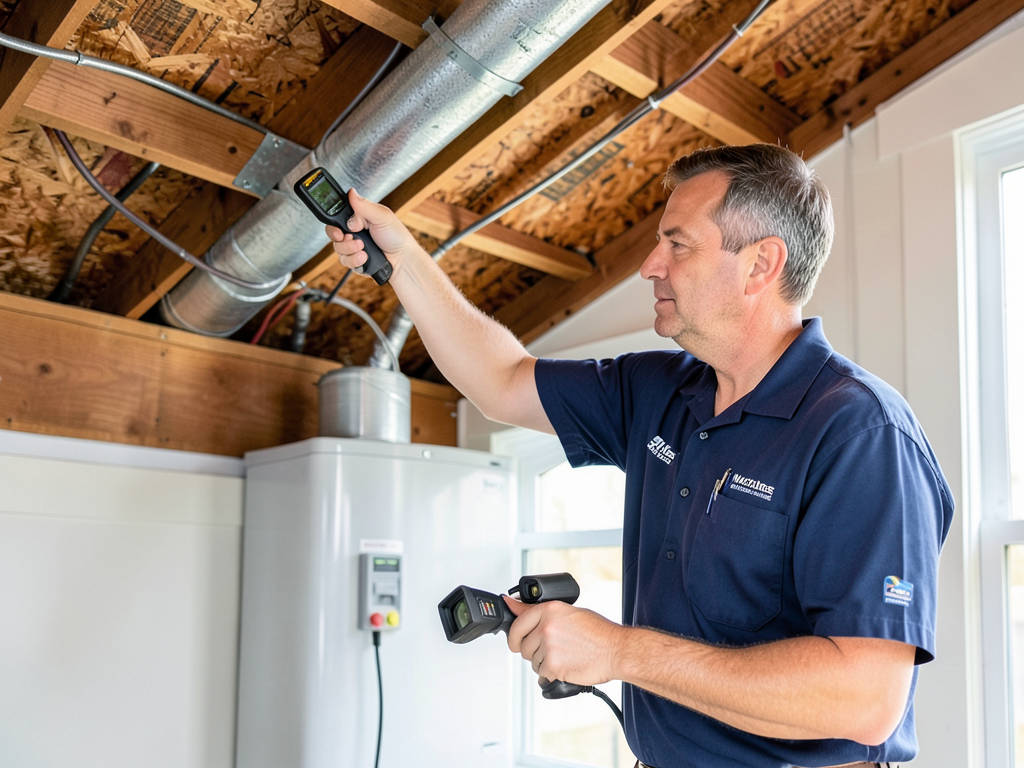
A proper assessment uses blower door testing to measure air infiltration and thermal imaging to identify moisture intrusion points. These diagnostic tools reveal whether your home can actually benefit from additional ventilation or if it would create more problems than it solves.
Many Westchase homes built before 2010 lack the vapor barriers and proper sealing required for whole house fan operation. Without these fundamentals, any ventilation system becomes a moisture delivery mechanism rather than a comfort solution.
Cost Comparison: Fan vs. Proper HVAC Solutions
Initial costs for whole house fans range from $1,200 to $3,500 installed. However, the total cost of ownership in Westchase typically exceeds $8,000 within five years when accounting for increased AC runtime, potential mold remediation, and premature fan replacement due to corrosion.
A properly sized, high-efficiency air conditioning system with humidity control costs $4,000 to $8,000 initially but provides reliable comfort and moisture control for 15-20 years. The energy savings alone often offset the higher upfront cost within 3-5 years. Reliable Commercial HVAC Services for Temple Terrace Business Owners.
Energy recovery ventilators, while more expensive initially at $2,500 to $4,500 installed, offer the best long-term value for Westchase homes. They provide the fresh air benefits of whole house fans without the humidity problems, operating efficiently year-round in our climate.
Maintenance Requirements for Humid Climates
Whole house fans in Westchase require maintenance schedules that many homeowners underestimate. The humid air causes motor bearings to fail prematurely, typically within 2-3 years instead of the 5-7 years promised by manufacturers.
Shutter seals degrade quickly in our climate, allowing outside air infiltration even when the fan is off. This creates drafts and allows moisture intrusion during humid nights, undermining the very comfort the system was meant to provide.
Professional maintenance for whole house fans in Westchase costs $150-250 annually, compared to $75-125 for standard HVAC maintenance. The higher costs reflect the additional cleaning required to remove salt deposits and the more frequent part replacements needed in our corrosive environment.
Smart Home Integration Options
For homeowners committed to whole house ventilation, smart controls offer the best chance of success in Westchase. Modern systems integrate with weather stations to monitor outdoor humidity and temperature, automatically disabling the fan when conditions exceed safe thresholds.
These smart systems typically add $300-500 to the installation cost but can prevent the most common failures. They monitor dew point rather than just temperature, ensuring the fan only operates when it will actually improve comfort rather than worsen humidity problems.
Some advanced systems also integrate with your air conditioning to provide coordinated operation. When outdoor conditions are favorable, the system uses the whole house fan. When humidity rises, it automatically switches to air conditioning, providing the best of both worlds without the risks of manual operation.
Local Building Code Considerations
The Florida Building Code Section 403.6.2 requires specific attic ventilation calculations that many whole house fan installations fail to meet. The code mandates 1 square foot of net free area per 150 square feet of attic space, a requirement that becomes more stringent when whole house fans are involved.
Westchase’s location in Hillsborough County means additional requirements apply. The county’s high wind zone provisions require all attic penetrations to be sealed and reinforced, adding complexity and cost to whole house fan installations that national manufacturers rarely account for in their specifications.
Building permits for whole house fans in Westchase typically cost $150-300 and require engineered drawings showing compliance with all local codes. Many homeowners skip this step, creating liability issues if moisture problems develop later and insurance companies question the installation’s compliance. Troubleshooting AC Issues.
When Whole House Fans Might Work in Westchase
There are limited scenarios where whole house fans can provide value in Westchase. Homes with excellent vapor barriers, proper attic sealing, and smart controls might benefit during the brief periods when outdoor conditions are favorable—typically only a few weeks each winter.
New construction offers the best opportunity for successful whole house fan integration. Homes designed from the ground up with proper vapor barriers, sealed attics, and coordinated HVAC systems can sometimes accommodate these systems without the moisture problems that plague retrofits.
However, even in these ideal scenarios, energy recovery ventilators typically provide superior performance and reliability. The additional cost is offset by better humidity control, lower maintenance requirements, and longer system life in our challenging climate.
Making the Right Choice for Your Home
The decision about whole house fans ultimately comes down to understanding Westchase’s unique climate challenges. Our high humidity, salt air, and building code requirements create an environment where simple ventilation solutions often fail.
Before investing in any ventilation system, schedule a professional assessment with a contractor who understands our local conditions. Look for companies with specific experience in Westchase and the surrounding areas, as they’ll understand the unique challenges our homes face.
The right solution for your home might be a high-efficiency air conditioner with humidity control, an energy recovery ventilator, or in rare cases, a properly engineered whole house fan system. The key is matching the technology to your home’s specific characteristics and our local climate realities. How to Choose the Right New Air Conditioner for Your Westchase Home.
Don’t let the promise of energy savings lead you to a solution that creates bigger problems. In Westchase’s humid climate, proper moisture control isn’t just about comfort—it’s about protecting your home’s structure and your family’s health.
Frequently Asked Questions
Can I use a whole house fan during Florida’s winter months?
Yes, but only during cold fronts when dew points drop below 55°F. Even then, monitor indoor humidity levels carefully. Many Westchase homeowners find that our winter humidity rarely drops low enough for safe whole house fan operation.
How do I know if my home has moisture problems from a whole house fan?
Look for condensation on windows, musty odors, wood floor cupping, or mold spots on walls and ceilings. A professional moisture meter test can detect hidden problems in walls and attics before visible damage occurs.
Are there any whole house fan brands that work better in humid climates?
While some manufacturers claim enhanced corrosion resistance, no whole house fan effectively handles Tampa’s humidity levels. Energy recovery ventilators and properly sized air conditioning systems provide superior performance in our climate regardless of brand.
What’s the difference between a whole house fan and an attic fan?
Whole house fans pull air through living spaces, while attic fans only ventilate the attic. Attic fans can help reduce heat buildup but don’t address humidity issues and won’t cool your home on their own.
How much does professional mold testing cost in Westchase?
Professional mold testing typically costs $300-600 in Westchase, depending on the size of your home and the number of samples needed. This investment can identify problems before they cause expensive structural damage.
Take Control of Your Home’s Comfort Today
Whole house fans might seem like an attractive solution, but in Westchase’s humid climate, they often create more problems than they solve. The moisture issues, mold risks, and energy inefficiency make them a poor investment for most local homes.
Before making any decisions about your home’s ventilation, get a professional assessment from someone who understands Westchase’s unique challenges. Our team has helped hundreds of local homeowners find the right balance of comfort, efficiency, and moisture control.
Don’t let humidity problems damage your home or compromise your family’s health. Call (656) 237-5377 today to schedule your comprehensive home comfort assessment. We’ll evaluate your specific situation and recommend solutions that actually work in Westchase’s challenging climate.
Pick up the phone and call (656) 237-5377 before the next humid afternoon makes your whole house fan problems worse. Your home deserves solutions that work with our climate, not against it. For more information, visit Energy.gov whole house fan guide. For more information, visit EPA mold information.
{
“@context”: “https://schema.org”,
“@type”: “BlogPosting”,
“headline”: “Why Whole House Fans Often Fail to Solve Humidity Issues in Westchase Homes”,
“description”: “Whole house fans struggle in Tampa’s humid climate. Learn why they often worsen moisture problems and what Westchase homeowners should do instead.”,
“wordCount”: 2346,
“datePublished”: “2026-06-11T14:36:00.000Z”,
“dateModified”: “2026-06-11T14:36:00.000Z”,
“inLanguage”: “en-US”,
“mainEntityOfPage”: {
“@type”: “WebPage”,
“@id”: “https://peakhvactampa.com”
},
“publisher”: {
“@type”: “LocalBusiness”,
“name”: “Peak HVAC Tampa”,
“url”: “https://peakhvactampa.com”
},
“author”: {
“@type”: “Organization”,
“name”: “Peak HVAC Tampa”,
“url”: “https://peakhvactampa.com”
},
“image”: {
“@type”: “ImageObject”,
“url”: “https://peakhvactampa.com/wp-content/uploads/2026/03/why-whole-house-fans-often-fail-to-solve-humidity-1.png”
}
}
{
“@context”: “https://schema.org”,
“@type”: “HVACBusiness”,
“name”: “Peak HVAC Tampa”,
“url”: “https://peakhvactampa.com”,
“address”: {
“@type”: “PostalAddress”,
“addressLocality”: “Tampa”
},
“areaServed”: {
“@type”: “City”,
“name”: “Tampa”
}
}
{
“@context”: “https://schema.org”,
“@type”: “FAQPage”,
“mainEntity”: [
{
“@type”: “Question”,
“name”: “Can I use a whole house fan during Florida’s winter months?”,
“acceptedAnswer”: {
“@type”: “Answer”,
“text”: “Yes, but only during cold fronts when dew points drop below 55°F. Even then, monitor indoor humidity levels carefully. Many Westchase homeowners find that our winter humidity rarely drops low enough for safe whole house fan operation.”
}
},
{
“@type”: “Question”,
“name”: “How do I know if my home has moisture problems from a whole house fan?”,
“acceptedAnswer”: {
“@type”: “Answer”,
“text”: “Look for condensation on windows, musty odors, wood floor cupping, or mold spots on walls and ceilings. A professional moisture meter test can detect hidden problems in walls and attics before visible damage occurs.”
}
},
{
“@type”: “Question”,
“name”: “Are there any whole house fan brands that work better in humid climates?”,
“acceptedAnswer”: {
“@type”: “Answer”,
“text”: “While some manufacturers claim enhanced corrosion resistance, no whole house fan effectively handles Tampa’s humidity levels. Energy recovery ventilators and properly sized air conditioning systems provide superior performance in our climate regardless of brand.”
}
},
{
“@type”: “Question”,
“name”: “What’s the difference between a whole house fan and an attic fan?”,
“acceptedAnswer”: {
“@type”: “Answer”,
“text”: “Whole house fans pull air through living spaces, while attic fans only ventilate the attic. Attic fans can help reduce heat buildup but don’t address humidity issues and won’t cool your home on their own.”
}
},
{
“@type”: “Question”,
“name”: “How much does professional mold testing cost in Westchase?”,
“acceptedAnswer”: {
“@type”: “Answer”,
“text”: “Professional mold testing typically costs $300-600 in Westchase, depending on the size of your home and the number of samples needed. This investment can identify problems before they cause expensive structural damage.”
}
}
]
}
{
“@context”: “https://schema.org”,
“@type”: “BreadcrumbList”,
“itemListElement”: [
{
“@type”: “ListItem”,
“position”: 1,
“name”: “Home”,
“item”: “https://peakhvactampa.com”
},
{
“@type”: “ListItem”,
“position”: 2,
“name”: “Blog”,
“item”: “https://peakhvactampa.com/blog”
},
{
“@type”: “ListItem”,
“position”: 3,
“name”: “Why Whole House Fans Often Fail to Solve Humidity Issues in Westchase Homes”
}
]
}
{
“@context”: “https://schema.org”,
“@type”: “Service”,
“serviceType”: “HVAC”,
“provider”: {
“@type”: “LocalBusiness”,
“name”: “Peak HVAC Tampa”,
“url”: “https://peakhvactampa.com”
},
“areaServed”: {
“@type”: “City”,
“name”: “Tampa”
},
“description”: “Whole house fans struggle in Tampa’s humid climate. Learn why they often worsen moisture problems and what Westchase homeowners should do instead.”
}