
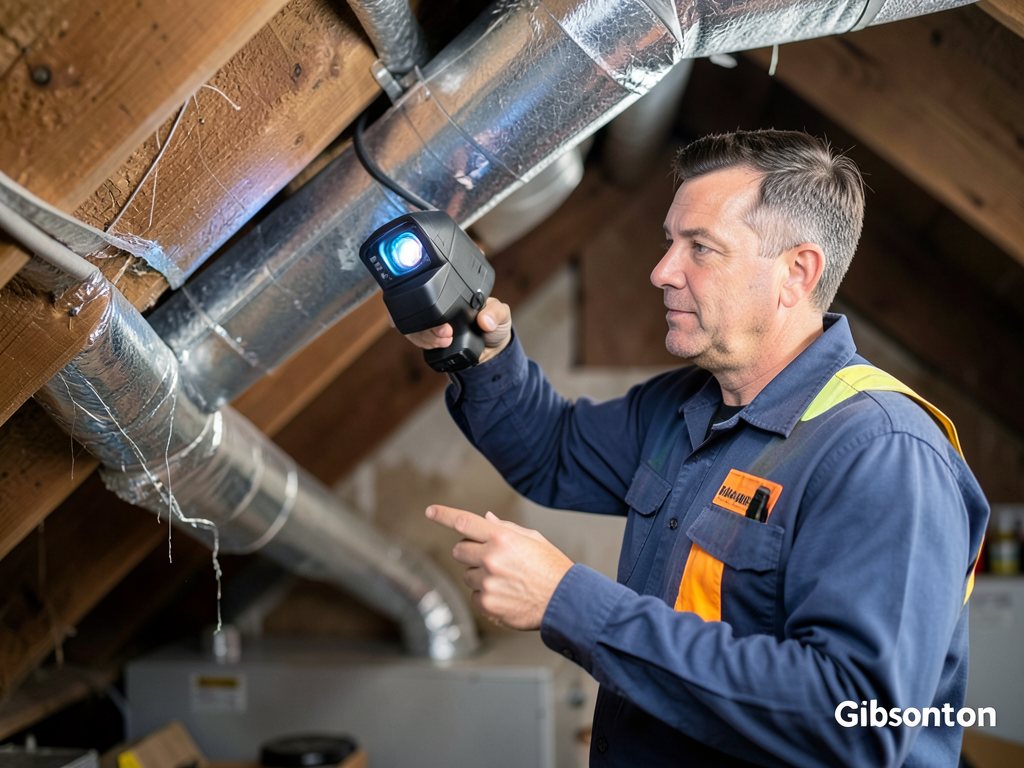
How to tell if your Gibsonton home has a hidden air duct leak
Your Gibsonton home feels stuffy even when the AC runs constantly. Your utility bills keep climbing higher each month. These problems might not be your AC unit at all – they could be hidden air duct leaks silently wasting energy and money. Energy Star duct sealing guidelines.
Living near the Alafia River means your home faces unique HVAC challenges. The humid Florida climate puts extra strain on duct systems, especially older ones installed before modern energy codes. When ducts leak, your AC works overtime trying to cool and dehumidify air that escapes into your attic or crawlspace instead of your living areas. Florida Building Code requirements.
Finding duct leaks early can save you hundreds on energy bills and prevent mold growth that thrives in Tampa’s moisture-rich environment. Here’s how to spot the warning signs and what to do about them.
Why duct leaks hit Gibsonton homes harder than other areas
The Florida Building Code (FBC) Section 403.2.2 requires R-8 insulation for supply ducts in unconditioned spaces, but many Gibsonton homes built before 2004 only have R-4.2 insulation that degrades faster in our heat and humidity.
High attic temperatures – often exceeding 130°F in summer – accelerate duct deterioration. The combination of heat, humidity, and salt air from Tampa Bay creates perfect conditions for duct tape adhesive to fail and insulation to break down.
Older homes near US 41 often have ductwork running through unconditioned spaces with minimal insulation. These systems lose conditioned air before it reaches your rooms, forcing your AC to run longer cycles.
7 warning signs your Gibsonton home has leaking air ducts
Recognizing these symptoms early helps you address problems before they cause major damage or energy waste.
1. Unexplained spikes in your TECO energy bills
When ducts leak, your AC runs longer to compensate for lost cooling. A typical Gibsonton home with 20% duct leakage wastes about 30% more energy than a sealed system. That translates to $40-60 extra on your monthly bill during peak cooling season.
Compare this summer’s bills to last year. If you’re using the same AC but paying more, duct leaks could be the culprit.
2. Rooms that never feel comfortable
Leaky supply ducts can’t deliver enough conditioned air to distant rooms. You might notice bedrooms stay 5-8 degrees warmer than your living room, even with all vents open.. Read more about Why the AC vents in your Northview Hills house are sweating.
Rooms farthest from your air handler typically suffer most. If your master bedroom or home office always feels stuffy while other areas are fine, check your ductwork first.
3. Excessive dust accumulating near vents
Leaky return ducts pull unfiltered air from attics, crawlspaces, and wall cavities. This dust-laden air gets distributed through your home, creating more cleaning work and potential allergy problems.
Notice more dust on furniture near vents? Your ducts might be pulling dirty air from hidden spaces.
4. Whistling or rattling sounds from walls
Air rushing through gaps creates distinctive noises. You might hear whistling when the system starts or rattling as air vibrates loose connections.
Listen near vents during AC operation. Unusual sounds often indicate air escaping through cracks or loose fittings.
5. Musty odors when the AC runs
Leaky ducts in humid attics pull moist air into your system. This moisture creates perfect conditions for mold growth inside ducts and around air handlers.
If you smell mildew when the AC kicks on, especially in humid weather, you likely have moisture problems in your duct system.
6. Hot and cold spots throughout your home
Inconsistent temperatures between rooms often indicate duct problems. You might walk from a cool living room into a stuffy bedroom, then find the kitchen freezing cold.
These temperature swings waste energy as you adjust thermostats trying to compensate for uneven cooling.
7. Your AC runs constantly but never cools enough
When 20-30% of your cooled air escapes before reaching rooms, your system can’t keep up. The AC runs longer cycles trying to reach the thermostat setting, but never quite gets there.
If your system runs 70-80% of the time instead of the normal 40-60%, duct leaks could be forcing it to work overtime.
How to perform a flashlight test for visible leaks
You can check for obvious duct problems without special equipment. Here’s a simple test Gibsonton homeowners can do themselves. Why Most Carrollwood Homeowners Choose Local HVAC Experts Over Big Box Brands.
- Turn on your AC system
Set your thermostat to cooling mode and let it run for 10 minutes. This builds pressure in the duct system.
- Access your attic or crawlspace
Wear protective gear including gloves, long sleeves, and a dust mask. Bring a strong flashlight and pen for marking problem areas.
- Inspect visible duct runs
Look for disconnected sections, especially at joints and elbows. Check where ducts connect to vents and the air handler.
- Check insulation condition
Compressed or torn insulation reduces R-value. Look for areas where insulation has fallen away or gotten wet.
- Mark problem areas
Use chalk or masking tape to mark spots needing repair. Focus on disconnected joints, torn insulation, and visible gaps.
Common trouble spots include where ducts pass through walls, connections to ceiling registers, and joints in long duct runs. Gibsonton’s older homes often have ductwork installed in unconditioned attics with minimal protection from the elements.
Professional duct testing methods used in Tampa Bay
Professional HVAC technicians use specialized equipment to find hidden leaks that DIY tests miss. These methods provide accurate measurements of duct leakage.
Blower door test for duct leakage
Technicians seal your home and use a powerful fan to pressurize the entire duct system. They measure how much air escapes through leaks using specialized gauges that detect pressure changes.
This test reveals total duct leakage percentage. Florida code requires new homes to have less than 4% leakage, but many existing homes leak 20-40%.
Smoke testing for visual leak detection
Technicians inject non-toxic smoke into your duct system. The smoke escapes through leaks, making them visible even in dark attics or crawlspaces.
This method works well for finding small leaks around joints, connections, and damaged insulation that pressure tests might miss.
Thermal imaging for hidden problems
Infrared cameras detect temperature differences caused by air escaping through leaks. Cool air leaking into hot attics shows up as dark spots on thermal images.
This technology finds leaks behind walls, under floors, and in hard-to-reach areas without destructive testing.
Duct sealing options: from DIY to professional solutions
Not all duct problems require professional help. Here’s what you can tackle yourself versus when to call experts.
DIY fixes for minor leaks
Small gaps and loose connections can be sealed with mastic sealant and foil tape. Clean the area first, then apply mastic with a brush or putty knife.
Never use standard duct tape – it fails quickly in Florida’s heat and humidity. Foil-backed tape rated for HVAC use lasts much longer.
Aeroseal technology for whole-system sealing
Aeroseal uses polymer particles injected into your duct system. These particles find and seal leaks from the inside out, even in inaccessible areas.
This method can seal leaks in walls, under floors, and in attic spaces without cutting into drywall. It typically reduces leakage by 90% or more.
When replacement makes more sense
Ducts older than 15-20 years often have multiple failure points. If your system has widespread deterioration, replacement might be more cost-effective than repeated repairs.
Modern R-8 insulated ducts with antimicrobial lining resist the moisture and mold problems common in Tampa’s climate.
Cost of ignoring duct leaks in your Gibsonton home
Small leaks compound over time, creating bigger problems and higher costs. Here’s what you risk by delaying repairs.
Energy waste and higher utility bills
A home with 25% duct leakage wastes about 40% more energy than a sealed system. At current TECO rates around $0.14 per kWh, that’s $50-80 extra monthly during cooling season.
Over five years, you could spend $3,000-5,000 extra on electricity that escapes through duct leaks.
Indoor air quality problems
Leaky return ducts pull pollutants from attics and crawlspaces into your breathing air. This includes dust, insulation fibers, pest droppings, and mold spores.
Florida’s high humidity means these contaminants often carry moisture that promotes mold growth throughout your home.
AC system strain and premature failure
Your AC works harder to compensate for lost air, running longer cycles and experiencing more wear. This reduces system lifespan by 2-4 years on average.
Replacing an AC unit costs $4,000-8,000, while duct sealing typically runs $500-2,000. Fixing ducts extends your current system’s life.
Schedule your duct inspection in Gibsonton
Don’t wait until your energy bills double or your AC fails on the hottest day of summer. A professional duct inspection can identify problems before they cause major damage.
Call (656) 237-5377 today to schedule your comprehensive duct inspection. Our NATE-certified technicians use advanced diagnostic tools to find every leak, no matter how hidden.
We serve all of Gibsonton and surrounding areas including Apollo Beach, Riverview, and Ruskin. Our inspections include detailed reports with photos and recommendations for fixing any problems we find.
Don’t let hidden duct leaks waste your money and compromise your comfort. Pick up the phone and call (656) 237-5377 before the next heat wave hits.
Frequently Asked Questions
How much does professional duct sealing cost in Gibsonton?
Professional duct sealing typically costs $800-2,500 depending on your home’s size and the extent of leaks. Aeroseal technology runs $1,500-3,000 but provides the most thorough sealing. Most homeowners recoup these costs within 2-3 years through energy savings.
Can I seal duct leaks myself or should I hire a professional?
You can handle minor leaks with mastic sealant and foil tape, but professional testing finds hidden problems you’ll miss. DIY fixes work for visible gaps, but pressure testing reveals leaks inside walls and under floors that require specialized equipment to locate.
How long does duct sealing take and will I need to leave my home?
Most duct sealing jobs take 4-8 hours. Aeroseal requires 2-3 hours of system access but you can stay home. Traditional sealing might require attic access, so plan for technicians to need space to work. Your AC will be off during sealing but back on the same day.
What’s the difference between duct cleaning and duct sealing?
Duct cleaning removes dust and debris but doesn’t fix leaks. Sealing repairs gaps and connections to prevent air loss. You might need both services – cleaning first, then sealing – but sealing provides the energy savings and comfort improvements most homeowners need. Who to Call for 24-Hour AC Service in New Tampa When the Temperature Starts Climbing.
{
“@context”: “https://schema.org”,
“@type”: “BlogPosting”,
“headline”: “How to tell if your Gibsonton home has a hidden air duct leak”,
“description”: “Discover 7 warning signs of leaking air ducts in your Gibsonton home. Learn DIY tests, professional solutions, and how Tampa’s humidity affects duct integrity. Call (656) 237-5377 for expert inspection.”,
“wordCount”: 1762,
“datePublished”: “2026-03-26T16:35:00.000Z”,
“dateModified”: “2026-03-26T16:35:00.000Z”,
“inLanguage”: “en-US”,
“mainEntityOfPage”: {
“@type”: “WebPage”,
“@id”: “https://peakhvactampa.com”
},
“publisher”: {
“@type”: “LocalBusiness”,
“name”: “Peak HVAC Tampa”,
“url”: “https://peakhvactampa.com”
},
“author”: {
“@type”: “Organization”,
“name”: “Peak HVAC Tampa”,
“url”: “https://peakhvactampa.com”
},
“image”: {
“@type”: “ImageObject”,
“url”: “https://peakhvactampa.com/wp-content/uploads/2026/03/how-to-tell-if-your-gibsonton-home-has-a-hidden-ai-1.png”
}
}
{
“@context”: “https://schema.org”,
“@type”: “HVACBusiness”,
“name”: “Peak HVAC Tampa”,
“url”: “https://peakhvactampa.com”,
“address”: {
“@type”: “PostalAddress”,
“addressLocality”: “Tampa”
},
“areaServed”: {
“@type”: “City”,
“name”: “Tampa”
}
}
{
“@context”: “https://schema.org”,
“@type”: “FAQPage”,
“mainEntity”: [
{
“@type”: “Question”,
“name”: “How much does professional duct sealing cost in Gibsonton?”,
“acceptedAnswer”: {
“@type”: “Answer”,
“text”: “Professional duct sealing typically costs $800-2,500 depending on your home’s size and the extent of leaks. Aeroseal technology runs $1,500-3,000 but provides the most thorough sealing. Most homeowners recoup these costs within 2-3 years through energy savings.”
}
},
{
“@type”: “Question”,
“name”: “Can I seal duct leaks myself or should I hire a professional?”,
“acceptedAnswer”: {
“@type”: “Answer”,
“text”: “You can handle minor leaks with mastic sealant and foil tape, but professional testing finds hidden problems you’ll miss. DIY fixes work for visible gaps, but pressure testing reveals leaks inside walls and under floors that require specialized equipment to locate.”
}
},
{
“@type”: “Question”,
“name”: “How long does duct sealing take and will I need to leave my home?”,
“acceptedAnswer”: {
“@type”: “Answer”,
“text”: “Most duct sealing jobs take 4-8 hours. Aeroseal requires 2-3 hours of system access but you can stay home. Traditional sealing might require attic access, so plan for technicians to need space to work. Your AC will be off during sealing but back on the same day.”
}
},
{
“@type”: “Question”,
“name”: “What’s the difference between duct cleaning and duct sealing?”,
“acceptedAnswer”: {
“@type”: “Answer”,
“text”: “Duct cleaning removes dust and debris but doesn’t fix leaks. Sealing repairs gaps and connections to prevent air loss. You might need both services – cleaning first, then sealing – but sealing provides the energy savings and comfort improvements most homeowners need. Who to Call for 24-Hour AC Service in New Tampa When the Temperature Starts Climbing.”
}
}
]
}
{
“@context”: “https://schema.org”,
“@type”: “HowTo”,
“name”: “How to perform a flashlight test”,
“step”: [
{
“@type”: “HowToStep”,
“position”: 1,
“name”: “Turn on your AC system”,
“text”: “Set your thermostat to cooling mode and let it run for 10 minutes. This builds pressure in the duct system.”
},
{
“@type”: “HowToStep”,
“position”: 2,
“name”: “Access your attic or crawlspace”,
“text”: “Wear protective gear including gloves, long sleeves, and a dust mask. Bring a strong flashlight and pen for marking problem areas.”
},
{
“@type”: “HowToStep”,
“position”: 3,
“name”: “Inspect visible duct runs”,
“text”: “Look for disconnected sections, especially at joints and elbows. Check where ducts connect to vents and the air handler.”
},
{
“@type”: “HowToStep”,
“position”: 4,
“name”: “Check insulation condition”,
“text”: “Compressed or torn insulation reduces R-value. Look for areas where insulation has fallen away or gotten wet.”
},
{
“@type”: “HowToStep”,
“position”: 5,
“name”: “Mark problem areas”,
“text”: “Use chalk or masking tape to mark spots needing repair. Focus on disconnected joints, torn insulation, and visible gaps.”
}
],
“image”: “https://peakhvactampa.com/wp-content/uploads/2026/03/how-to-tell-if-your-gibsonton-home-has-a-hidden-ai-1.png”
}
{
“@context”: “https://schema.org”,
“@type”: “BreadcrumbList”,
“itemListElement”: [
{
“@type”: “ListItem”,
“position”: 1,
“name”: “Home”,
“item”: “https://peakhvactampa.com”
},
{
“@type”: “ListItem”,
“position”: 2,
“name”: “Blog”,
“item”: “https://peakhvactampa.com/blog”
},
{
“@type”: “ListItem”,
“position”: 3,
“name”: “How to tell if your Gibsonton home has a hidden air duct leak”
}
]
}
{
“@context”: “https://schema.org”,
“@type”: “Service”,
“serviceType”: “HVAC”,
“provider”: {
“@type”: “LocalBusiness”,
“name”: “Peak HVAC Tampa”,
“url”: “https://peakhvactampa.com”
},
“areaServed”: {
“@type”: “City”,
“name”: “Tampa”
},
“description”: “Discover 7 warning signs of leaking air ducts in your Gibsonton home. Learn DIY tests, professional solutions, and how Tampa’s humidity affects duct integrity. Call (656) 237-5377 for expert inspection.”
}