
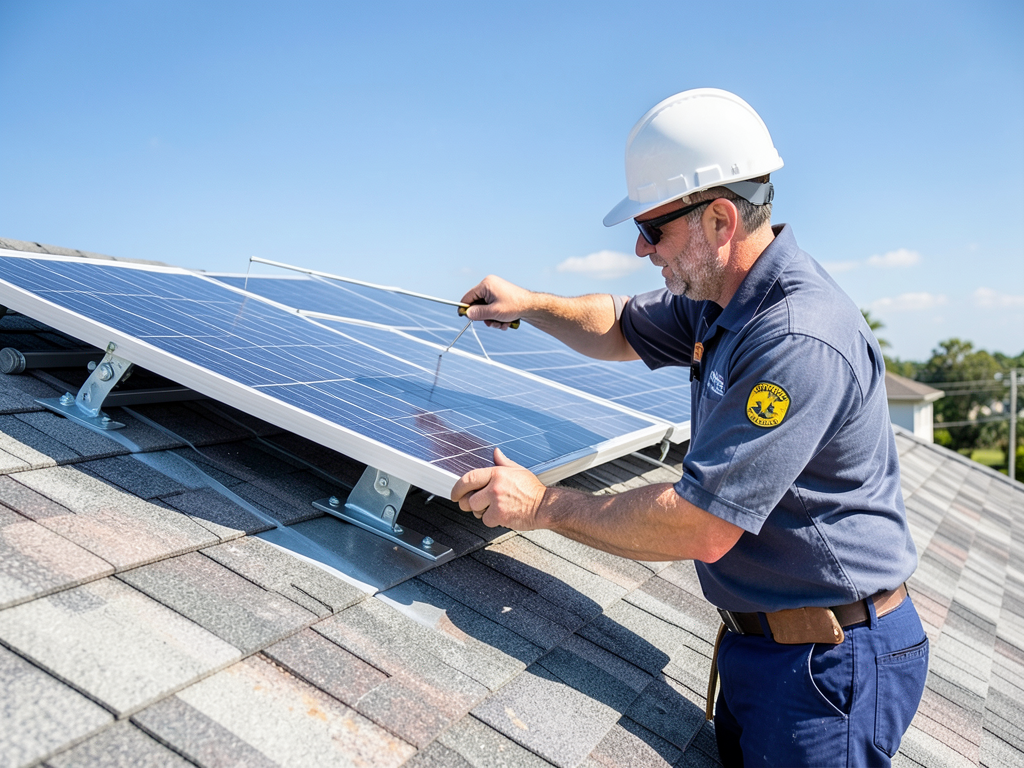
Solar Attic Fans and Your AC: The Truth for Citrus Park Homes
Solar attic fans can lower attic temperatures by 20-40 degrees in Tampa’s intense heat, but their impact on AC efficiency depends on your home’s specific construction and insulation. In Citrus Park’s hot, humid climate, these fans reduce the heat load your air conditioner must overcome, potentially cutting cooling costs by 10-15% during peak summer months. However, they work best as part of a comprehensive attic ventilation strategy rather than as a standalone solution.
The real question isn’t whether solar attic fans help your AC cool your home—it’s how much they help based on your specific attic configuration, insulation levels, and the age of your cooling system. Let’s examine the science and local factors that determine their actual performance in Citrus Park.
How Attic Heat Directly Impacts Your AC Load
Heat moves from hot to cold areas through three mechanisms: conduction through your ceiling, radiation from the roof deck, and convection through attic bypasses. When your attic reaches 150-160 degrees on a summer afternoon, that heat radiates downward into your living space, forcing your AC to work overtime.. Read more about Preventing a ceiling collapse in your Fish Hawk home with a simple AC float switch.
A typical Citrus Park home with R-19 insulation in the ceiling still experiences significant heat transfer. The temperature difference between your cooled living space and the attic creates a constant heat flow. Your AC compressor runs longer cycles, experiences more wear, and consumes more electricity to maintain comfort.
The physics are straightforward: for every 10-degree reduction in attic temperature, your ceiling’s heat gain decreases by approximately 5-7%. This translates to measurable energy savings, but only if the attic fan actually achieves those temperature reductions consistently. ENERGY STAR ventilation guidelines.
Solar Attic Fans: Performance Realities in Florida
Solar attic fans in Tampa typically move 800-1,200 cubic feet per minute (CFM) of air when operating at peak sunlight. For a standard 1,500-2,000 square foot Citrus Park home, this provides adequate ventilation when combined with proper passive intake vents.
The Florida sun presents both an opportunity and a challenge. While solar panels generate maximum power during the hottest part of the day—exactly when you need attic cooling—the intense heat can reduce fan motor efficiency by 10-15%. Quality fans with thermally protected motors maintain better performance during extreme conditions. Florida Building Code requirements.
Passive ventilation through soffit and ridge vents moves air through the stack effect, but this natural convection rarely achieves the 10-15 air changes per hour needed for significant temperature reduction. Active solar-powered ventilation creates positive pressure that forces hot air out more effectively.. Read more about Does Your New Pool Cage in Carrollwood Village Change How Your AC Works.
The Efficiency Debate: Can a Fan Actually Lower Your Electric Bill?
Based on TECO’s average residential rate of 15.5 cents per kilowatt-hour in 2026, a solar attic fan that reduces your AC runtime by 15% can save $15-25 monthly during peak cooling season. Installation costs typically range from $800-1,500, creating a payback period of 3-5 years.
The savings depend on several factors. Homes with older AC units (pre-2015) see the greatest benefit because their compressors work harder to overcome attic heat. Newer SEER2-rated systems are more efficient but still experience reduced performance in extreme attic temperatures.
AC cycle frequency provides another metric. A home without attic ventilation might see the compressor run 18-22 hours per day during a heat wave. With proper solar attic ventilation, that runtime can drop to 14-18 hours while maintaining the same indoor temperature.
Tampa Specific Considerations
High humidity creates unique challenges for attic ventilation in Citrus Park. When outside air enters a hot attic, it can reach dew point temperatures and condense on cooler surfaces. This moisture can damage insulation, promote mold growth, and reduce the effectiveness of your ventilation system.
Florida Building Code Section 502.1.3 requires attic ventilation to prevent moisture accumulation and maintain structural integrity. Solar fans must be installed with proper intake ventilation to prevent negative pressure that could pull conditioned air from your living space through ceiling leaks.
Hurricane-rated mounting hardware is mandatory for any roof-mounted equipment in Citrus Park. The 175+ mph wind zone requirements mean solar fans need reinforced brackets and tamper-resistant fasteners. Many manufacturers now offer fans specifically engineered for Florida’s wind mitigation standards.
TECO offers energy efficiency rebates that can offset 20-30% of installation costs for qualifying solar attic ventilation systems. The federal solar Investment Tax Credit (ITC) provides an additional 30% credit on the installed cost, making the economics more attractive for Citrus Park homeowners. Why Most Carrollwood Homeowners Choose Local HVAC Experts Over Big Box Brands.
The Verdict: When to Choose a Solar Fan over AC Upgrades
Solar attic fans make the most sense for Citrus Park homes with good insulation but aging AC systems. If your unit is 10+ years old and struggles during heat waves, improving attic ventilation provides immediate relief while you plan for eventual replacement.
For homes with poor insulation or significant air leaks, attic fans alone won’t solve the problem. The heat transfer through the ceiling overwhelms even the best ventilation. In these cases, air sealing and insulation upgrades should precede any attic fan installation.
The ideal scenario combines solar attic ventilation with radiant barrier installation. This dual approach addresses both convective heat removal and radiant heat transfer, providing maximum reduction in attic temperatures and AC workload.
Call (656) 237-5377 today to schedule your inspection. Our technicians can evaluate your specific attic configuration and provide data-driven recommendations for improving your home’s cooling efficiency.
Frequently Asked Questions
Will a solar attic fan work at night when the sun isn’t shining?
No, standard solar attic fans only operate during daylight hours. However, by reducing daytime attic temperatures, they prevent heat buildup that would continue radiating into your home after sunset. Some systems offer battery backup for limited nighttime operation.
How do I know if my attic needs a fan or just better insulation?
A professional energy audit using thermal imaging can identify your specific heat transfer issues. Homes with good insulation but high attic temperatures benefit most from ventilation. Homes with poor insulation need air sealing and additional R-value regardless of ventilation. Troubleshooting AC Issues.
Can a solar attic fan damage my roof or void my shingle warranty?
Properly installed fans following Florida Building Code requirements won’t damage your roof. However, some shingle manufacturers require specific installation methods to maintain warranty coverage. Always use licensed contractors familiar with local building requirements.
What size solar attic fan do I need for my Citrus Park home?
The general rule is 1 CFM per square foot of attic space, but this varies based on roof pitch, existing ventilation, and local climate. A 1,500 square foot home typically needs a 1,000-1,200 CFM fan, but a professional calculation ensures proper sizing.
You may also find this helpful. Using a blower door test to find hidden energy leaks in your Hyde Park house.
You may also find this helpful. Keeping Your New Backyard Office in Carrollwood Forest Cool Without Breaking the Bank.
{
“@context”: “https://schema.org”,
“@type”: “BlogPosting”,
“headline”: “Do solar attic fans really help your air conditioner cool a Citrus Park home”,
“description”: “Discover if solar attic fans actually reduce AC workload in Tampa’s hot, humid climate. Get data-backed ROI analysis and local building code insights for Citrus Park homeowners.”,
“wordCount”: 1109,
“datePublished”: “2026-05-03T10:06:00.000Z”,
“dateModified”: “2026-05-03T10:06:00.000Z”,
“inLanguage”: “en-US”,
“mainEntityOfPage”: {
“@type”: “WebPage”,
“@id”: “https://peakhvactampa.com”
},
“publisher”: {
“@type”: “LocalBusiness”,
“name”: “Peak HVAC Tampa”,
“url”: “https://peakhvactampa.com”
},
“author”: {
“@type”: “Organization”,
“name”: “Peak HVAC Tampa”,
“url”: “https://peakhvactampa.com”
},
“image”: {
“@type”: “ImageObject”,
“url”: “https://peakhvactampa.com/wp-content/uploads/2026/03/do-solar-attic-fans-really-help-your-air-condition-1.png”
}
}
{
“@context”: “https://schema.org”,
“@type”: “HVACBusiness”,
“name”: “Peak HVAC Tampa”,
“url”: “https://peakhvactampa.com”,
“address”: {
“@type”: “PostalAddress”,
“addressLocality”: “Tampa”
},
“areaServed”: {
“@type”: “City”,
“name”: “Tampa”
}
}
{
“@context”: “https://schema.org”,
“@type”: “FAQPage”,
“mainEntity”: [
{
“@type”: “Question”,
“name”: “The Efficiency Debate: Can a Fan Actually Lower Your Electric Bill?”,
“acceptedAnswer”: {
“@type”: “Answer”,
“text”: “Based on TECO’s average residential rate of 15.5 cents per kilowatt-hour in 2026, a solar attic fan that reduces your AC runtime by 15% can save $15-25 monthly during peak cooling season. Installation costs typically range from $800-1,500, creating a payback period of 3-5 years.”
}
},
{
“@type”: “Question”,
“name”: “Will a solar attic fan work at night when the sun isn’t shining?”,
“acceptedAnswer”: {
“@type”: “Answer”,
“text”: “No, standard solar attic fans only operate during daylight hours. However, by reducing daytime attic temperatures, they prevent heat buildup that would continue radiating into your home after sunset. Some systems offer battery backup for limited nighttime operation.”
}
},
{
“@type”: “Question”,
“name”: “How do I know if my attic needs a fan or just better insulation?”,
“acceptedAnswer”: {
“@type”: “Answer”,
“text”: “A professional energy audit using thermal imaging can identify your specific heat transfer issues. Homes with good insulation but high attic temperatures benefit most from ventilation. Homes with poor insulation need air sealing and additional R-value regardless of ventilation. Troubleshooting AC Issues.”
}
},
{
“@type”: “Question”,
“name”: “Can a solar attic fan damage my roof or void my shingle warranty?”,
“acceptedAnswer”: {
“@type”: “Answer”,
“text”: “Properly installed fans following Florida Building Code requirements won’t damage your roof. However, some shingle manufacturers require specific installation methods to maintain warranty coverage. Always use licensed contractors familiar with local building requirements.”
}
},
{
“@type”: “Question”,
“name”: “What size solar attic fan do I need for my Citrus Park home?”,
“acceptedAnswer”: {
“@type”: “Answer”,
“text”: “The general rule is 1 CFM per square foot of attic space, but this varies based on roof pitch, existing ventilation, and local climate. A 1,500 square foot home typically needs a 1,000-1,200 CFM fan, but a professional calculation ensures proper sizing.”
}
}
]
}
{
“@context”: “https://schema.org”,
“@type”: “BreadcrumbList”,
“itemListElement”: [
{
“@type”: “ListItem”,
“position”: 1,
“name”: “Home”,
“item”: “https://peakhvactampa.com”
},
{
“@type”: “ListItem”,
“position”: 2,
“name”: “Blog”,
“item”: “https://peakhvactampa.com/blog”
},
{
“@type”: “ListItem”,
“position”: 3,
“name”: “Do solar attic fans really help your air conditioner cool a Citrus Park home”
}
]
}
{
“@context”: “https://schema.org”,
“@type”: “Service”,
“serviceType”: “HVAC”,
“provider”: {
“@type”: “LocalBusiness”,
“name”: “Peak HVAC Tampa”,
“url”: “https://peakhvactampa.com”
},
“areaServed”: {
“@type”: “City”,
“name”: “Tampa”
},
“description”: “Discover if solar attic fans actually reduce AC workload in Tampa’s hot, humid climate. Get data-backed ROI analysis and local building code insights for Citrus Park homeowners.”
}