
7 Warning Signs Your Lowry Park AC is Low on Refrigerant
If your AC is struggling to cool your home in Tampa’s heat, you might think it just needs a quick recharge. But here’s the truth: refrigerant doesn’t get used up like gas in a car. If your system is low, you have a leak somewhere in the closed loop. In Lowry Park’s humid subtropical climate, even small leaks can cause big problems fast.
The first sign many homeowners notice is warm air coming from vents. When refrigerant drops below the proper level, the evaporator coil can’t absorb enough heat from your indoor air. Instead of crisp 55-degree air, you get lukewarm air that feels like you’re running the fan only. This happens because the pressure-temperature relationship in your system is off balance. Why Most Carrollwood Homeowners Choose Local HVAC Experts Over Big Box Brands.
Another red flag is ice buildup on the evaporator coil or refrigerant lines. You might see frost on the copper lines running from your air handler or notice ice crystals on the coil through the access panel. This ice forms because the pressure drop across the coil is too severe when refrigerant is low. The coil temperature drops below freezing, and moisture from Tampa’s 70% average humidity turns to ice on contact.
Hissing or bubbling noises from the outdoor condenser unit often mean refrigerant is escaping under pressure. A healthy AC system runs quietly with just the sound of the fan and compressor. If you hear a distinct hissing that sounds like air escaping from a tire, or a bubbling noise that resembles boiling water, you likely have a leak in a high-pressure line or at a connection fitting.
Watch your TECO energy bills closely. A sudden unexplained spike in your monthly electric charges often points to an inefficient AC system. When refrigerant is low, your compressor runs longer cycles trying to reach the thermostat setting. Those extended run times can increase your bill by 20-30% without providing the cooling you need. In Lowry Park’s hot summers, this inefficiency compounds quickly.
Why Ice Forms on Your AC Even in Tampa’s 95-Degree Heat
It seems backwards that ice would form on your AC when it’s 95 degrees outside in Tampa. But the science is straightforward. Your AC’s evaporator coil relies on precise pressure and temperature relationships. When refrigerant levels drop, the pressure in the coil drops too. Lower pressure means lower boiling point. The refrigerant inside the coil can then reach temperatures below 32 degrees Fahrenheit even though the air around your outdoor unit is scorching hot.
Think of it like water boiling at different temperatures based on altitude. At sea level, water boils at 212 degrees. But on a mountain, it boils at a lower temperature because of reduced atmospheric pressure. Your AC coil works on the same principle in reverse. The reduced pressure from low refrigerant creates conditions where the coil surface temperature falls below freezing, and the abundant moisture in Tampa’s air freezes on contact.
This ice doesn’t just affect cooling performance. As the ice builds up, it insulates the coil and blocks airflow. Your system works harder, the compressor runs hotter, and electrical components strain to maintain operation. Left unchecked, this can lead to complete system failure and expensive repairs. EPA Section 608 certification requirements.
The Hidden Dangers of Running Your AC with Low Refrigerant
Many homeowners think adding refrigerant is a simple fix. But running your system with low levels creates a cascade of problems that can destroy your entire AC unit. The compressor is the heart of your system, and it depends on refrigerant for cooling and lubrication. When levels are low, the compressor can overheat and seize up completely.
Compressor replacement in Tampa typically costs $1,800 to $3,500, and that’s if the rest of your system survives. If the compressor fails catastrophically, metal shavings can circulate through your refrigerant lines, contaminating the entire system. In that case, you’re looking at a full system replacement costing $4,000 to $8,000 or more.
Low refrigerant also creates perfect conditions for mold growth. When your evaporator coil freezes and thaws repeatedly, it creates condensation that drips into areas where it shouldn’t. Combined with Tampa’s high humidity, this moisture can lead to mold colonies in your air handler, ductwork, and even inside your walls. The cost to remediate mold in an AC system can exceed $2,000.. Read more about Three HVAC repairs you should never try to DIY in your Sulphur Springs home.
Why Lowry Park Homes Are Prone to Refrigerant Leaks
Lowry Park’s location near the Hillsborough River and its mix of older and newer construction creates unique challenges for AC systems. Many homes in the area were built between the 1950s and 1980s when AC technology was different. These older systems often use copper lines that can corrode over time, especially in Florida’s salty coastal air that drifts inland.
The area’s high water table also affects AC performance. Homes built on lots with poor drainage can experience ground shifting that puts stress on refrigerant lines running through concrete slabs or under foundations. Temperature fluctuations cause copper lines to expand and contract, and over decades this movement can create tiny cracks that grow into significant leaks.
Lowry Park’s mix of tree cover and open spaces also affects AC longevity. Homes under dense tree canopy experience less UV degradation on outdoor units but more debris accumulation in coils. This debris can trap moisture against coils and fittings, accelerating corrosion. Homes in more open areas face direct sun exposure that causes more thermal cycling in copper lines.
Professional Leak Detection Methods We Use in Tampa
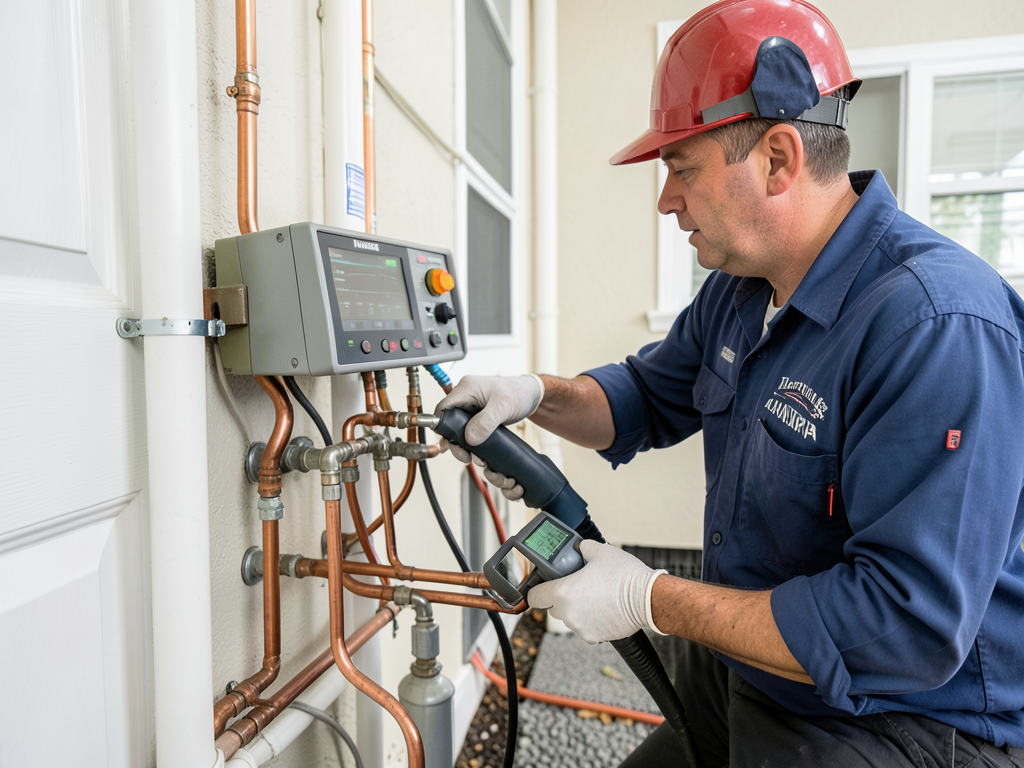
At Peak HVAC, we use multiple diagnostic methods to locate refrigerant leaks accurately. Electronic leak detectors use heated diode or infrared sensors to detect refrigerant concentrations as low as 0.1 ounce per year. These handheld devices can pinpoint leaks in seconds, even in hard-to-reach areas like attic air handlers or wall-mounted units.. Read more about Why you should get a second opinion before replacing your AC in Carrollwood.
We also use ultraviolet dye testing for stubborn leaks. We inject a small amount of fluorescent dye into your system and let it circulate for several days. Under UV light, even microscopic leaks glow brightly, showing exactly where refrigerant is escaping. This method is particularly effective for finding leaks in evaporator coils or areas where electronic detectors struggle to reach. How to Choose the Right New Air Conditioner for Your Westchase Home.
Pressure testing is another diagnostic tool we use. We isolate sections of your AC system and pressurize them with nitrogen to check for pressure drops that indicate leaks. This method helps us determine if a leak is in the evaporator coil, condenser coil, or refrigerant lines. According to EPA Section 608 regulations, we must repair leaks before adding refrigerant to any system losing more than 15% of its charge annually.
Should You Add Refrigerant Yourself? Here’s Why That’s Dangerous
You might see refrigerant recharge kits at home improvement stores and think it’s a simple DIY fix. But adding refrigerant without proper training and equipment is not only ineffective, it’s illegal in many cases and can be dangerous. EPA Section 608 certification is required to handle refrigerants, and violating these regulations can result in fines up to $37,500 per day.
Beyond the legal issues, DIY refrigerant addition can cause serious damage. Without proper gauges and diagnostic tools, you can’t know if you’re adding the right type or amount of refrigerant. Too much refrigerant is just as harmful as too little. Overcharging can cause compressor damage, reduced efficiency, and even system explosions in extreme cases. Troubleshooting AC Issues.
Florida’s humidity also complicates DIY attempts. When you add refrigerant to a system with existing leaks, you’re just throwing money away. The new refrigerant will escape through the same leak paths. Professional leak detection and repair is the only way to solve the underlying problem and restore your system’s efficiency.
Maintenance Schedule to Prevent Refrigerant Issues in Tampa
Preventive maintenance is your best defense against refrigerant leaks and AC failures in Tampa’s climate. We recommend professional AC maintenance twice yearly for Lowry Park homes: once in spring before the cooling season and again in fall after heavy summer use. These tune-ups include checking refrigerant levels, inspecting for leaks, and cleaning coils that accumulate mold and debris. HVAC Spring Hill.
Between professional visits, you can monitor your system’s performance. Check your air filter monthly and replace it when it looks dirty. A clogged filter reduces airflow across the evaporator coil, which can cause the same symptoms as low refrigerant. Also listen for unusual noises and watch for ice buildup on the outdoor unit or refrigerant lines.
Consider a maintenance plan with a local Tampa HVAC company. Many offer priority service, discounted repairs, and annual system inspections that catch small problems before they become expensive emergencies. In Lowry Park’s hot and humid climate, this proactive approach can extend your AC system’s life by 3-5 years and prevent unexpected breakdowns during summer heat waves. Who to Call for 24-Hour AC Service in New Tampa When the Temperature Starts Climbing.
Frequently Asked Questions
How much does it cost to fix a refrigerant leak in Tampa?
Leak repair costs vary widely based on location and severity. Simple fitting repairs might cost $200-$400, while evaporator coil replacement can run $1,200-$2,500. Most homeowners in Lowry Park spend $300-$800 for professional leak detection and repair. We provide free estimates to diagnose the exact issue.
Can I just add refrigerant to my AC myself?
No. Adding refrigerant requires EPA Section 608 certification and specialized equipment. DIY attempts can damage your system, void warranties, and result in fines up to $37,500 per violation. Plus, if you have a leak, the refrigerant will just escape again, wasting money and harming the environment.
How long does refrigerant last in an AC system?
In a properly sealed system, refrigerant should last the entire lifespan of your AC, typically 15-20 years. If you’re losing refrigerant, you have a leak that needs professional repair. A system that needs annual recharging definitely has a significant leak requiring immediate attention.
What’s the difference between R-22 and R-410A refrigerant?
R-22, also called Freon, was the standard refrigerant for decades but is being phased out due to environmental concerns. R-410A, known as Puron, is the current standard and more environmentally friendly. Most AC systems installed after 2010 use R-410A. If your Lowry Park home has an older system using R-22, replacement parts are becoming scarce and expensive.
Call Peak HVAC Today for Expert Refrigerant Service
Don’t let refrigerant leaks turn your Lowry Park home into an uncomfortable sauna this summer. Our NATE-certified technicians use advanced diagnostic equipment to find and fix leaks quickly, restoring your AC’s cooling power and efficiency. We understand Tampa’s unique climate challenges and provide solutions that last.
Pick up the phone and call (656) 237-5377 today to schedule your inspection. We offer same-day service for urgent cooling issues and provide clear, upfront pricing with no hidden fees. Your comfort is our priority, and we’ll have your AC running at peak performance before the next heat wave hits.
Don’t wait until your system fails completely. Early detection and repair save you money and prevent the inconvenience of losing cooling during Tampa’s hottest months. Call Peak HVAC at (656) 237-5377 now to protect your home’s comfort and your family’s well-being. For more information, visit Department of Energy AC efficiency guide.
You may also find this helpful. Why Your AC Keeps Turning On and Off Every Few Minutes in Thonotosassa.
You may also find this helpful. Do solar attic fans really help your air conditioner cool a Citrus Park home.
You may also find this helpful. Why your Brandon home feels sticky even when the air conditioner is running.
{
“@context”: “https://schema.org”,
“@type”: “BlogPosting”,
“headline”: “How to know if your Lowry Park AC is actually low on refrigerant”,
“description”: “Is your Lowry Park AC blowing warm air? Learn the 7 signs of low refrigerant, why Tampa’s humidity makes it worse, and when to call Peak HVAC at (656) 237-5377.”,
“wordCount”: 1883,
“datePublished”: “2026-04-09T09:54:00.000Z”,
“dateModified”: “2026-04-09T09:54:00.000Z”,
“inLanguage”: “en-US”,
“mainEntityOfPage”: {
“@type”: “WebPage”,
“@id”: “https://peakhvactampa.com”
},
“publisher”: {
“@type”: “LocalBusiness”,
“name”: “Peak HVAC Tampa”,
“url”: “https://peakhvactampa.com”
},
“author”: {
“@type”: “Organization”,
“name”: “Peak HVAC Tampa”,
“url”: “https://peakhvactampa.com”
},
“image”: {
“@type”: “ImageObject”,
“url”: “https://peakhvactampa.com/wp-content/uploads/2026/03/how-to-know-if-your-lowry-park-ac-is-actually-low-1.png”
}
}
{
“@context”: “https://schema.org”,
“@type”: “HVACBusiness”,
“name”: “Peak HVAC Tampa”,
“url”: “https://peakhvactampa.com”,
“address”: {
“@type”: “PostalAddress”,
“addressLocality”: “Tampa”
},
“areaServed”: {
“@type”: “City”,
“name”: “Tampa”
}
}
{
“@context”: “https://schema.org”,
“@type”: “FAQPage”,
“mainEntity”: [
{
“@type”: “Question”,
“name”: “How much does it cost to fix a refrigerant leak in Tampa?”,
“acceptedAnswer”: {
“@type”: “Answer”,
“text”: “Leak repair costs vary widely based on location and severity. Simple fitting repairs might cost $200-$400, while evaporator coil replacement can run $1,200-$2,500. Most homeowners in Lowry Park spend $300-$800 for professional leak detection and repair. We provide free estimates to diagnose the exact issue.”
}
},
{
“@type”: “Question”,
“name”: “Can I just add refrigerant to my AC myself?”,
“acceptedAnswer”: {
“@type”: “Answer”,
“text”: “No. Adding refrigerant requires EPA Section 608 certification and specialized equipment. DIY attempts can damage your system, void warranties, and result in fines up to $37,500 per violation. Plus, if you have a leak, the refrigerant will just escape again, wasting money and harming the environment.”
}
},
{
“@type”: “Question”,
“name”: “How long does refrigerant last in an AC system?”,
“acceptedAnswer”: {
“@type”: “Answer”,
“text”: “In a properly sealed system, refrigerant should last the entire lifespan of your AC, typically 15-20 years. If you’re losing refrigerant, you have a leak that needs professional repair. A system that needs annual recharging definitely has a significant leak requiring immediate attention.”
}
},
{
“@type”: “Question”,
“name”: “What’s the difference between R-22 and R-410A refrigerant?”,
“acceptedAnswer”: {
“@type”: “Answer”,
“text”: “R-22, also called Freon, was the standard refrigerant for decades but is being phased out due to environmental concerns. R-410A, known as Puron, is the current standard and more environmentally friendly. Most AC systems installed after 2010 use R-410A. If your Lowry Park home has an older system using R-22, replacement parts are becoming scarce and expensive.”
}
}
]
}
{
“@context”: “https://schema.org”,
“@type”: “BreadcrumbList”,
“itemListElement”: [
{
“@type”: “ListItem”,
“position”: 1,
“name”: “Home”,
“item”: “https://peakhvactampa.com”
},
{
“@type”: “ListItem”,
“position”: 2,
“name”: “Blog”,
“item”: “https://peakhvactampa.com/blog”
},
{
“@type”: “ListItem”,
“position”: 3,
“name”: “How to know if your Lowry Park AC is actually low on refrigerant”
}
]
}
{
“@context”: “https://schema.org”,
“@type”: “Service”,
“serviceType”: “HVAC”,
“provider”: {
“@type”: “LocalBusiness”,
“name”: “Peak HVAC Tampa”,
“url”: “https://peakhvactampa.com”
},
“areaServed”: {
“@type”: “City”,
“name”: “Tampa”
},
“description”: “Is your Lowry Park AC blowing warm air? Learn the 7 signs of low refrigerant, why Tampa’s humidity makes it worse, and when to call Peak HVAC at (656) 237-5377.”
}